

Updated July 2026
Some dogs approach water carefully.
They dip one paw in, think it over, and decide whether getting wet is really worth the effort.
Other dogs launch themselves into the nearest pond before anyone has checked the water, the bank or whether there is an easy way back out.
Loving water does not automatically make a dog a safe or capable swimmer.
Water play can be enjoyable and useful exercise for many dogs. It can also provide enrichment, confidence building and a different way to explore.
But water brings risks too.
Currents, steep banks, poor water quality, blue-green algae, fishing hooks, tides, exhaustion and swallowing too much water can all turn a fun outing into an emergency.
This guide explains how I approach water safety as a professional dog walker, including:
- rivers and streams
- lakes and ponds
- canals and reservoirs
- beaches and seawater
- paddling pools
- water toys
- buoyancy aids
- long lines
- puppies, older dogs and nervous dogs
- what to do in an emergency
For wider advice about walking during warm weather, heatstroke and changing your dog’s routine, start with my Summer Dog Safety Guide.
Some links on this page may be affiliate links. If you buy through one, I may receive a small commission at no additional cost to you. As an Amazon Associate, I earn from qualifying purchases. I only recommend products that fit the practical advice on this page.
The quick dog water-safety checklist
Before allowing your dog near or into water, ask:
- Is swimming permitted here?
- Are there warning signs?
- Is the water moving quickly?
- Can my dog enter and leave easily?
- Is the bank steep, muddy or slippery?
- Can I see algae, foam, dead fish or pollution?
- Are there fishing hooks, line or broken glass nearby?
- Is the water unusually cold?
- Could the tide cut us off?
- Is my dog physically able to swim?
- Are they already hot, tired or overexcited?
- Do I have fresh drinking water?
- Can I supervise them continuously?
- Would a lead or buoyancy aid be more sensible?
- What would I do if they got into difficulty?
If you cannot answer those questions confidently, keep your dog out.
There is no need to let a dog swim simply because the water is there.
Can all dogs swim?
No.
Many dogs make paddling movements when they enter water, but that does not mean they can swim safely, confidently or for very long.
A dog’s ability may be affected by:
- body shape
- leg length
- weight
- age
- fitness
- health
- coat type
- previous experience
- water temperature
- waves or currents
- fear and panic
Some dogs naturally hold themselves well in water.
Others struggle to keep their head above the surface.
Flat-faced dogs may find swimming particularly difficult because of their breathing and body shape. Dogs with short legs, heavy bodies or reduced mobility may also need more support.
Older dogs may tire sooner than they used to.
A young, excited dog may keep swimming long after their muscles have started to tire.
Never assume a dog is safe because of their breed.
I have met Labradors that were not interested in swimming and dogs with no obvious water-working background that wanted to climb into every puddle.
Look at the individual dog in front of you.
Never force a dog into water
A dog should never be:
- pushed into water
- thrown into water
- dragged towards it
- cornered at the water’s edge
- pulled in by their lead
- laughed at when they panic
Forcing a dog into water does not teach them to swim.
It may teach them that water, and possibly the person holding the lead, cannot be trusted.
Some dogs enjoy deep swimming.
Some only want to paddle.
Others prefer to watch from the bank and remain completely dry.
That is fine.
The aim should not be to create a dog that loves swimming.
The aim is to give your dog safe choices and help them feel confident.
This is particularly important for nervous and recently rescued dogs. My Rescue Dog Support in Finchley is based on the same principle.
Confidence should not be rushed.
How to introduce a dog to water
Start somewhere quiet, clean and shallow.
Let your dog approach at their own pace.
You can:
- walk alongside the water
- allow them to sniff the edge
- step into very shallow water yourself where it is safe
- reward calm investigation
- place a floating toy close to the edge
- let your dog leave whenever they choose
- keep the first session very short
Do not lure a nervous dog farther than they feel comfortable going.
Food can help create a positive association, but it should not be used to trick a worried dog into suddenly finding themselves in over their heads.
Watch your dog’s body language.
Signs that they may not be comfortable include:
- leaning away
- freezing
- repeatedly trying to leave
- keeping their weight backwards
- frantic paddling
- wide eyes
- refusing treats
- shaking when they are not cold
- trying to climb onto you
- repeatedly turning their head away
Stop before your dog becomes frightened.
One calm minute near shallow water is more useful than ten minutes of panic.
Choosing somewhere safer for your dog to swim
No outdoor water is completely risk-free.
However, some places are more suitable than others.
Look for:
- clear signs that dogs are permitted
- clean-looking water
- no pollution or algae warnings
- calm conditions
- gentle entry points
- an obvious way out
- no sharp rocks or submerged rubbish
- no nearby anglers
- plenty of space
- easy access to shade
- somewhere you can remain close to your dog
Avoid water that has:
- warning notices
- strong currents
- fast-changing depth
- steep concrete or muddy sides
- locks, weirs or sluices
- blue-green scum
- unusual foam
- dead fish
- sewage smells
- oily patches
- large amounts of litter
- fishing line or hooks
- heavy boat traffic
A place that was safe on your previous visit may not be safe today.
Water levels, currents, algae, tides and pollution can change.
Check every time.
Rivers and streams
Rivers can look calm from the bank while moving much faster beneath the surface.
Rainfall farther upstream can also change the flow even when the weather where you are standing seems fine.
Risks include:
- currents
- deep channels
- submerged branches
- slippery stones
- sudden drops
- steep banks
- weirs
- fishing hooks
- broken glass
- pollution
- difficulty finding an exit point
Keep your dog on a lead near fast-flowing water, locks and steep edges.
Do not throw toys into a river unless you are certain that the water and exit points are suitable.
A dog focused on retrieving a ball may continue into deeper or faster water without assessing the danger.
I am also particularly cautious around streams during prolonged dry weather.
Low water may become slow, warm and stagnant. Pollution and animal waste may become more concentrated, while mud and debris become exposed.
My separate guide explains why I avoid ponds and streams during dry weather.
Lakes and ponds
Lakes and ponds often look more peaceful than rivers.
That does not automatically make them safe.
Possible risks include:
- blue-green algae
- steep or crumbling banks
- deep mud
- sudden changes in depth
- submerged plants
- fishing hooks and line
- polluted runoff
- animal waste
- water birds protecting nests or young
- hidden rubbish
- no easy exit point
Keep your dog away from water if you see warning notices, unusual colouring, dead fish, surface scum or paint-like streaks.
Blue-green algae is the common name for groups of bacteria called cyanobacteria. Some types produce toxins that can seriously harm or kill dogs.
A dog may be exposed by:
- drinking contaminated water
- swimming or paddling in it
- fetching a toy
- licking contaminated water from their coat
You cannot tell whether a bloom is toxic simply by looking at it.
Read the Blue Cross guide to blue-green algae.
Contact your vet immediately if you believe your dog has swallowed or entered water containing blue-green algae.
Do not wait for symptoms to develop.
Canals and reservoirs
I generally keep dogs out of canals.
Canals may have:
- deep water
- vertical sides
- few exit points
- locks
- boat traffic
- underwater obstacles
- discarded fishing equipment
- pollution
- strong movement near lock gates
A dog may jump in easily and then be unable to climb out.
Reservoirs can also contain deep, cold water, underwater structures and sudden changes in depth.
Some reservoirs do not permit swimming.
Follow signs and local restrictions.
A still surface does not tell you what is happening beneath it.
Walking beside a canal or reservoir can still be enjoyable.
Keep your dog under control and away from the edge, particularly if they chase birds, have unreliable recall or become highly excited by water.
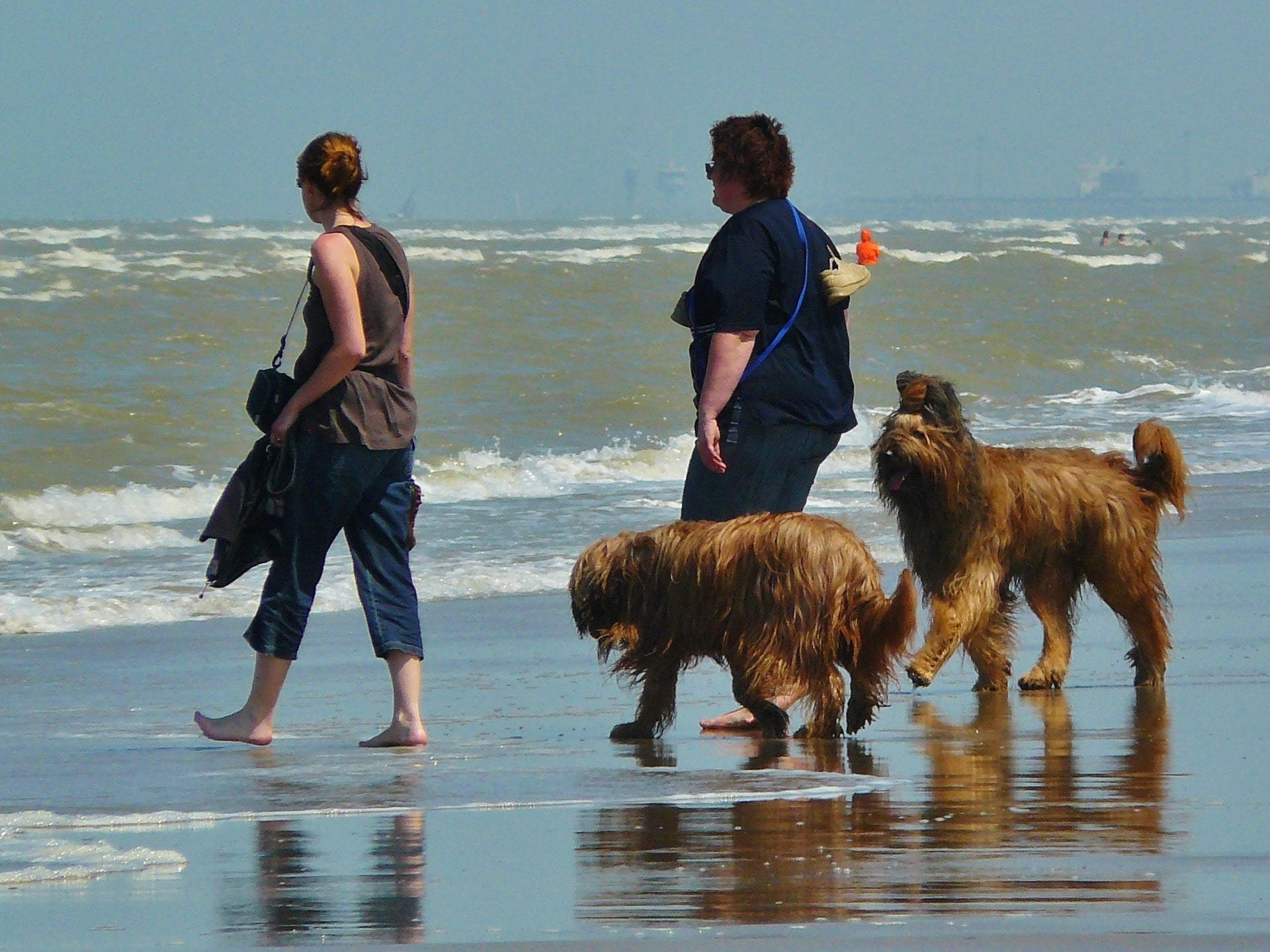
Beach and sea safety
A beach introduces a different set of risks.
Before visiting, check:
- whether dogs are permitted
- seasonal dog restrictions
- the tide times
- weather conditions
- warning flags
- wave height
- currents
- local water-quality warnings
- how much shade is available
Do not allow your dog into rough seas or strong currents.
Keep them on a lead near cliffs, harbour walls and fast-flowing estuaries.
Tides can cut off beaches, paths and rocky areas surprisingly quickly.
Fresh water is essential.
Dogs should not rely on seawater when they are thirsty. Swallowing seawater may cause vomiting, diarrhoea and dehydration.
Take a clean portable dog water bottle or travel bowl and offer fresh water regularly.
After swimming in the sea, rinse salt and sand from your dog’s coat with clean water.
Pay particular attention to:
- paws
- between the toes
- under the harness
- the underside of the body
- skin folds
Salt and sand left against the skin may cause irritation.
The PDSA water-safety guide includes further advice about beach, river and lake swimming.
Sewage and polluted water
Water that looks fairly normal may still be contaminated.
Possible sources include:
- sewage discharges
- road runoff
- agricultural runoff
- oils
- chemicals
- fertilisers
- animal waste
- illegal dumping
Water quality may be worse after heavy rainfall because runoff and sewage can enter rivers and coastal water.
Check local warnings and bathing-water information before allowing your dog to swim.
Avoid the water if you notice:
- a sewage smell
- unusual foam
- oily patches
- discolouration
- dead or distressed fish
- rubbish collecting at the edge
- warning signs
Dogs that swallow contaminated water may develop vomiting or diarrhoea.
Speak to your vet if your dog becomes unwell after swimming and explain where they were and what they may have swallowed.
Read the Blue Cross advice about dogs and sewage-contaminated water.
Leptospirosis and outdoor water
Leptospirosis is a bacterial infection that can cause severe illness in dogs.
It may be spread through water or soil contaminated by the urine of infected animals, particularly rats.
Dogs that spend a lot of time swimming may face a higher risk of exposure.
Possible symptoms include:
- vomiting
- diarrhoea
- lethargy
- reduced appetite
- jaundice
- changes in drinking or urination
- signs that your dog is generally very unwell
Contact your vet if your dog develops symptoms, particularly after outdoor swimming.
Speak to your vet about vaccinations and boosters appropriate for your dog.
Vaccination is important, but it does not make dirty or stagnant water safe.
Read the PDSA guide to leptospirosis in dogs.
Dogs can swallow too much water
Most owners know that dogs need access to drinking water.
Far fewer have heard of water intoxication.
Water intoxication, sometimes called water poisoning, can occur when a dog swallows an excessive amount of water over a relatively short period.
It is uncommon, but it can be serious.
Dogs may swallow large amounts while:
- repeatedly retrieving toys from water
- biting at hosepipes or sprinklers
- diving beneath the surface
- swimming with their mouth open
- playing in water for long periods
Possible symptoms include:
- unusual tiredness
- weakness
- wobbling
- vomiting
- bloating
- drooling
- confusion
- pale gums
- seizures
- collapse
Contact a vet immediately if you suspect water intoxication.
Do not restrict your dog’s normal access to drinking water.
The risk is associated with excessive swallowing during prolonged or intense water activity, not with sensible access to a freshwater bowl.
Help reduce the risk by:
- keeping water sessions short
- taking regular breaks
- discouraging repeated diving
- avoiding constant toy retrieval
- stopping frantic hosepipe chasing
- using suitable flat floating toys rather than toys that encourage the dog to gulp water
Read the PDSA guide to water intoxication in dogs.
Dogs can still overheat while swimming
Swimming does not make a hot day automatically safe.
An excited dog may:
- sprint into the water
- swim hard
- run back out
- chase a toy
- repeat the whole thing again
They are still exercising.
Some dogs become so focused on play that they do not stop when they are tired or hot.
Watch for:
- excessive panting
- slowing down
- drooling
- confusion
- wobbling
- weakness
- frantic behaviour
- reluctance to continue
Provide:
- shade
- fresh drinking water
- regular rest
- short sessions
- time to settle before travelling home
Do not use swimming as a reason to continue a long, energetic outing during dangerous heat.
My guide How Hot Is Too Hot to Walk Your Dog? explains why temperature is only one part of the decision.
You can also read my Extreme Weather Policy.
Should your dog wear a buoyancy aid?
A properly fitted dog buoyancy aid can provide additional support.
It may be particularly useful for:
- dogs learning to swim
- dogs with reduced mobility
- older dogs
- dogs on boats
- dogs swimming in deeper water
- dogs with less natural buoyancy
- dogs recovering their fitness with veterinary approval
Look for:
- a secure fit
- adjustable straps
- enough support around the body
- a strong handle
- good visibility
- freedom of movement around the shoulders
- no rubbing under the front legs
A buoyancy aid must fit the individual dog.
It should not be so loose that the dog slips out or so tight that it restricts breathing and movement.
Introduce it at home before going near water.
Let your dog wear it for short, positive sessions.
A buoyancy aid does not make dangerous water safe.
It is not a substitute for supervision, sensible conditions or an easy exit point.
[Add affiliate link: properly fitted dog buoyancy aid]
Should you use a long line near water?
A long line can be useful near water for dogs with unreliable recall, nervous dogs and dogs likely to chase birds.
However, it must be managed carefully.
I would:
- attach it to a secure harness
- keep hold of it
- prevent it wrapping around legs
- avoid letting it trail through branches or rubbish
- keep it away from other dogs and people
- use it to prevent entry into unsafe water
I would not allow a dog to swim in deep water while dragging a heavy long line.
A loose line may catch around branches, rocks, weeds or underwater rubbish.
Never attach a long line to a dog’s collar for this type of activity. A sudden stop could place unnecessary force on the neck.
A lightweight long line is most useful for controlling access around the bank, not as underwater rescue equipment.
Garden paddling pools
A clean, shallow paddling pool at home is often easier to manage than an unknown pond or river.
Choose a pool that is:
- shallow
- stable
- easy for your dog to enter
- easy for your dog to leave
- free from sharp edges
- placed on a non-slip surface
- positioned away from strong direct sun
Supervise your dog.
Do not fill the pool deeply.
Change the water regularly and empty it when it is not being supervised, particularly where children or wildlife may have access.
Some dogs like standing or lying in the water.
Others enjoy fishing for floating toys.
A few will look at the expensive paddling pool, walk past it and sit in the empty plant pot instead.
Let your dog choose.
A shallow dog paddling pool can be useful, but it is not essential.
A washing-up bowl or shallow tray may be enough for a small dog that only wants to dip their paws.
Sprinklers and hosepipes
Some dogs enjoy chasing water from a sprinkler or hosepipe.
Keep these games calm and brief.
Avoid:
- spraying water directly into the dog’s face
- encouraging constant biting at the water
- long frantic sessions
- slippery surfaces
- playing in strong midday heat
- forcing a dog that wants to move away
Dogs may swallow a surprising amount of water while trying to bite the stream.
Stop regularly and let your dog settle.
A dog becoming increasingly frantic is not necessarily having increasingly good fun.
Excitement and enjoyment are not always the same thing.
Floating toys and water retrieval
Choose toys designed to float and remain visible.
Avoid throwing toys:
- into fast-flowing water
- near boats
- near anglers
- into water with uncertain depth
- beyond your dog’s comfortable swimming distance
- towards reeds, weeds or submerged branches
Keep retrieval sessions short.
Constantly throwing a ball may encourage your dog to swim until they are exhausted or swallow excessive water.
A flatter floating toy may allow some dogs to close their mouth more comfortably than a round ball.
Do not throw sticks.
Sticks can cause serious injuries to the mouth, throat and chest.
The dog does not need fifty retrieves.
A few calm swims followed by rest may be plenty.
Water play for puppies
Puppies need short, positive experiences.
They can become tired, cold or overwhelmed quickly.
Choose:
- very shallow water
- a gentle entry point
- calm surroundings
- short sessions
- close supervision
Avoid:
- deep ponds
- strong currents
- steep banks
- slippery edges
- rough seas
- repeated jumping
- long swimming sessions
- busy groups of unfamiliar dogs
Do not use another dog to push a puppy beyond what they can manage.
A confident adult dog may encourage a puppy, but the puppy must still be allowed to stop and leave.
Young dogs are still developing physically.
Speak to your vet before introducing demanding swimming or hydrotherapy, particularly if your puppy has a health or joint concern.
Water play for older dogs
Swimming can be lower impact than running, but that does not mean it is suitable for every older dog.
Senior dogs may:
- tire sooner
- feel the cold more
- struggle with slippery banks
- have reduced strength
- find climbing out difficult
- become stiff afterwards
- have heart, breathing or mobility conditions
Choose an easy entry and exit.
Keep the session short.
Dry your dog promptly and give them somewhere warm and comfortable to rest.
A buoyancy aid may help some older dogs, but speak to your vet if you are unsure whether swimming is suitable.
Professional canine hydrotherapy is different from taking a dog for an uncontrolled swim in a lake.
Hydrotherapy should be provided by an appropriately qualified professional following veterinary advice where needed.
Nervous and rescue dogs around water
Water can introduce unfamiliar sounds, movement and surfaces.
A nervous dog may worry about:
- reflections
- waves
- splashing
- slippery ground
- other dogs jumping nearby
- not being able to see the bottom
- sudden changes in depth
Give them space.
A successful outing might simply involve walking beside the water and sniffing.
Do not measure confidence by how far the dog goes in.
For some dogs, choosing to place one paw in shallow water is genuine progress.
For others, choosing not to enter is the sensible decision.
My Sniff and Decompress Walk guide explains why slower exploration can be more useful than pushing for physical exercise.
What to do after swimming
Once your dog leaves the water:
- offer fresh drinking water
- let them rest
- rinse off salt, sand or questionable water
- check the paws
- look between the toes
- check for cuts
- check for fishing hooks and line
- remove the harness
- dry beneath straps and buckles
- dry the outer ears gently
- check the coat and skin
- keep them warm during the journey home
Do not insert cotton buds or other objects into your dog’s ears.
Dogs with dense coats may remain damp close to the skin long after the surface looks dry.
Pay attention to:
- the armpits
- groin
- belly
- skin folds
- beneath the collar
- beneath the harness
Persistent dampness and rubbing may contribute to skin irritation.
A microfibre dog drying robe may be useful for dogs with longer or thicker coats.
Seek veterinary advice if your dog develops:
- persistent coughing
- breathing difficulties
- vomiting
- diarrhoea
- weakness
- wobbling
- skin irritation
- ear pain
- unusual tiredness
- collapse
Tell the vet when and where your dog was swimming.
What if your dog gets into difficulty?
Do not enter dangerous water after your dog.
This is extremely important.
People have drowned while attempting to rescue dogs that later managed to reach the bank by themselves.
Move to a safe place where your dog can reach you.
Call them calmly.
Do not run along an unsafe bank or climb onto unstable structures.
Call 999 if your dog cannot get out or is in immediate danger.
At the coast, on tidal water or near cliffs, ask for the Coastguard.
In an inland water emergency, explain your exact location and the nature of the incident to the emergency operator.
Useful location information may include:
- the name of the park or waterway
- the nearest road
- a bridge number
- a lock number
- a visible landmark
- your What3words location
- which side of the water you are standing on
Follow the emergency service’s instructions.
The RNLI’s dog-walking safety advice is clear: do not put yourself in danger by going into the water after your dog.
My practical approach during dog walks
I do not treat every patch of water as free dog entertainment.
Before allowing a dog near water, I consider:
- the individual dog
- their recall
- their swimming ability
- the weather
- the temperature
- the water quality
- currents
- the bank
- other people
- wildlife
- fishing activity
- how the dog will get out
Sometimes the answer is yes.
Sometimes it is shallow paddling only.
Sometimes we stay on lead and walk past.
The dog may disagree with that final option.
That does not make it the wrong decision.
I carry fresh drinking water, choose routes carefully and change the plan when conditions are unsuitable.
My Hot Weather Dog Kit covers the few summer products I genuinely find useful.
Frequently asked questions
Is swimming good exercise for dogs?
Swimming can be useful exercise for dogs that enjoy it and are physically able to swim safely.
It may place less impact on the joints than running, but it still requires effort and can be tiring.
Keep sessions appropriate for your dog’s age, health and fitness.
Can every dog swim?
No.
Some dogs swim naturally, while others struggle to remain comfortably above the surface.
Never assume that a dog can swim just because of its breed or because it makes paddling movements.
How long should a dog swim for?
There is no single safe time for every dog.
A dog’s age, fitness, health, swimming ability, water temperature and conditions all matter.
Begin with very short sessions and stop while your dog is still comfortable.
Can dogs overheat while swimming?
Yes.
Swimming is exercise, and excited dogs may continue playing when they need to rest.
Provide shade, breaks and fresh water.
Can dogs drink from rivers and lakes?
I prefer that dogs drink clean water I have carried.
Outdoor water may contain bacteria, algae, pollution, animal waste or salt.
Are ponds safe for dogs?
Not always.
Ponds may contain blue-green algae, pollution, deep mud, fishing equipment and hidden debris.
Check the water and surrounding area every time.
Can dogs swim in canals?
I generally advise keeping dogs out of canals because they may have deep water, steep sides, locks, underwater hazards and limited exit points.
Should dogs wear buoyancy aids?
A properly fitted buoyancy aid may provide useful support, especially for dogs learning to swim, older dogs and dogs on boats.
It does not make unsafe water suitable.
Is seawater dangerous for dogs?
Swallowing seawater may cause vomiting, diarrhoea and dehydration.
Take fresh drinking water and prevent your dog from repeatedly drinking from the sea.
What is water intoxication?
Water intoxication can occur when a dog swallows an excessive amount of water over a short period.
It is uncommon but potentially serious.
Contact a vet immediately if you suspect it.
What should I do if my dog swims in blue-green algae?
Move them away from the water, prevent them from licking their coat and contact your vet immediately.
Tell the vet that you are concerned about exposure to blue-green algae.
Should I go into the water to rescue my dog?
No.
Do not put yourself in danger.
Call 999 if your dog cannot get out. At the coast or on tidal water, ask for the Coastguard.
What if my dog hates water?
That is completely normal.
Your dog does not need to swim to have a good life.
They may prefer sniff walks, shaded routes, indoor enrichment or simply resting somewhere cool.
Water should be enjoyable, not compulsory
Water play can be brilliant for the right dog in the right place.
But enthusiasm is not a safety assessment.
Before your dog jumps in, check:
- the dog
- the water
- the weather
- the entry
- the exit
- the surrounding area
Keep sessions short.
Carry fresh water.
Stop before your dog becomes exhausted or frantic.
And never force a dog that would rather remain on dry land.
Sometimes the safest water activity is a shallow paddling pool at home.
Sometimes it is a calm walk beside the lake.
Sometimes it is walking straight past the pond while the dog gives me a deeply disappointed look.
Safety comes first.
Looking for calm, one-to-one dog walking?
I provide solo dog walks in Finchley and Muswell Hill.
There are no group walks and no vans.
I walk locally, one dog or one household at a time, and adapt the route around the dog and the conditions on the day.
That includes keeping dogs away from unsafe water, even when they are very keen to investigate it.
Contact Del to ask about dog walking or pet care.
Disclaimer
This guide provides general dog care and water safety information. It does not replace advice from your vet, the emergency services or local water-safety authorities. Contact your vet promptly if your dog becomes unwell after swimming or may have been exposed to blue-green algae, polluted water, excessive water ingestion or another harmful substance. In a water emergency, do not enter dangerous water yourself. Call 999 and follow the emergency service’s instructions.


