Updated June 2026
Older dogs still need exercise, mental stimulation and time outdoors.
What they often need less of is speed, distance and pressure.
A walk that suited your dog at five years old may no longer suit them at twelve. They may walk more slowly, need longer to recover or prefer sniffing to running.
That does not mean they have stopped enjoying life.
It means their routine needs to change as they do.
I have walked many older dogs since starting Finchley Dog Walker in 2011. The happiest senior walks are rarely about covering miles. They are about giving the dog time.
Time to sniff.
Time to move comfortably.
Time to stop when they need to.
This guide explains how to exercise and entertain an elderly dog without pushing them beyond what they can comfortably manage.
Affiliate disclosure: This guide contains affiliate links. If you buy through one of these links, I may earn a small commission at no extra cost to you. I only include products that fit the calm, practical approach I use at Finchley Dog Walker. As an Amazon Associate, I earn from qualifying purchases.
Quick answer: How should you exercise an elderly dog?
Most senior dogs benefit from regular, gentle activity rather than occasional long walks.
A suitable routine may include:
- shorter, more frequent walks
- slow sniffing and exploration
- gentle games at home
- simple scent activities
- short training sessions
- plenty of rest between activities
No set number of minutes suits every older dog.
Your dog’s health, breed, weight, mobility and normal routine all matter. Dogs with arthritis, heart conditions, breathing difficulties or other medical problems may need an exercise plan agreed with their vet.
UK animal welfare organisations generally recommend keeping senior dogs active through regular, gentle exercise, often using a little-and-often approach rather than stopping walks altogether.
When is a dog considered senior?
There is no single age at which every dog becomes a senior.
Larger dogs often show age-related changes earlier than smaller dogs. Your dog’s health and behaviour usually tell you more than the number on their vaccination record.
You may notice:
- a slower walking pace
- stiffness after sleeping
- less interest in long walks
- difficulty getting up
- hesitation before using steps
- more sleeping during the day
- changes in hearing or eyesight
- taking longer to recover after exercise
- becoming more sensitive to cold or hot weather
- wanting more space from lively dogs
Some changes happen gradually.
Others can be signs of pain or illness.
Do not assume that limping, reluctance to walk or difficulty standing is simply old age. Speak to your vet when you notice a new or persistent change.
How much exercise does an elderly dog need?
There is no safe universal answer such as “every senior dog needs two 20-minute walks”.
One dog may enjoy a steady half-hour walk.
Another may be comfortable with ten minutes outside followed by a slow wander around the garden later.
Look at the individual dog.
Consider:
- what they managed comfortably last week
- how they move at the start of the walk
- whether they slow down during the walk
- how they behave after returning home
- whether they are stiff later that day
- how they move the following morning
A dog who appears comfortable during the walk may still have done too much if they are unusually stiff afterwards.
Regularity matters too.
A short daily walk is usually better than doing very little during the week and then attempting a long weekend outing. PDSA, the RSPCA and The Kennel Club all recommend adapting exercise while continuing to offer senior dogs regular opportunities to move and explore.
The dogs normal routing
Do not suddenly introduce a completely new exercise plan.
Start with what your dog already manages comfortably.
You can then adjust:
- the distance
- the route
- the walking pace
- the number of rest stops
- the time of day
- the amount of sniffing
- the number of daily outings
Change one thing at a time.
This makes it easier to see what helps and what leaves your dog tired or uncomfortable.
The best walks for senior dogs
A good senior dog walk should suit the dog in front of you.
It does not need to be fast or impressive.
Let your dog set the pace.
Try not to pull your dog along to finish a familiar route.
Older dogs may need longer to:
- get moving
- navigate uneven ground
- process what is happening around them
- stop and sniff
- Choose a comfortable position.
A slow walk is still a proper walk.
Allow plenty of sniffing.
Sniffing gives your dog a reason to explore without needing to run.
Your dog may spend several minutes investigating one hedge, tree, or lamppost. That is not wasted walking time.
For many older dogs, the chance to sniff familiar areas is the most enjoyable part of going out.
PDSA specifically recommends continuing to provide senior dogs with opportunities to go outside, sniff and stretch their legs, even when longer walks are no longer suitable. Sniffing is important for dogs.
Use familiar routes
Familiar places can be particularly helpful for dogs experiencing reduced hearing or eyesight.
Your dog may feel more secure when they recognise:
- the route
- the usual stopping places
- familiar smells
- quieter crossing points
- the journey home
This does not mean every walk must be identical.
It means avoiding unnecessary confusion when your dog is already finding the outside world more difficult.
Keep an easy route home.
Do not walk until your dog is exhausted, then expect them to cover the same distance back.
Choose short loops or routes that stay close to home.
This gives you the option to return early if your dog:
- slows down
- seems uncomfortable
- becomes too hot
- appears confused
- loses interest in continuing
Choose quieter times
Some senior dogs become less tolerant of busy parks, lively puppies or crowded pavements.
A quieter route can allow them to sniff and move without being repeatedly approached.
This is one reason I offer one-to-one dog walks rather than group walks. An older dog does not have to keep pace with younger dogs or cope with a busy van journey.
Adapt walks to the weather.
Older dogs can find very hot, cold or wet conditions more difficult.
During warm weather:
- walk earlier or later
- reduce the distance
- Choose shaded routes
- carry water
- Stop if your dog begins struggling
During cold or wet weather:
- keep outings manageable
- Dry your dog properly afterwards.
- Consider whether a coat is suitable.
- Use indoor enrichment when a long walk would be uncomfortable
Exercise is a common cause of heatstroke, so extra care is needed during warm weather, particularly with older dogs or dogs with existing medical problems.
Signs your older dog may have done too much
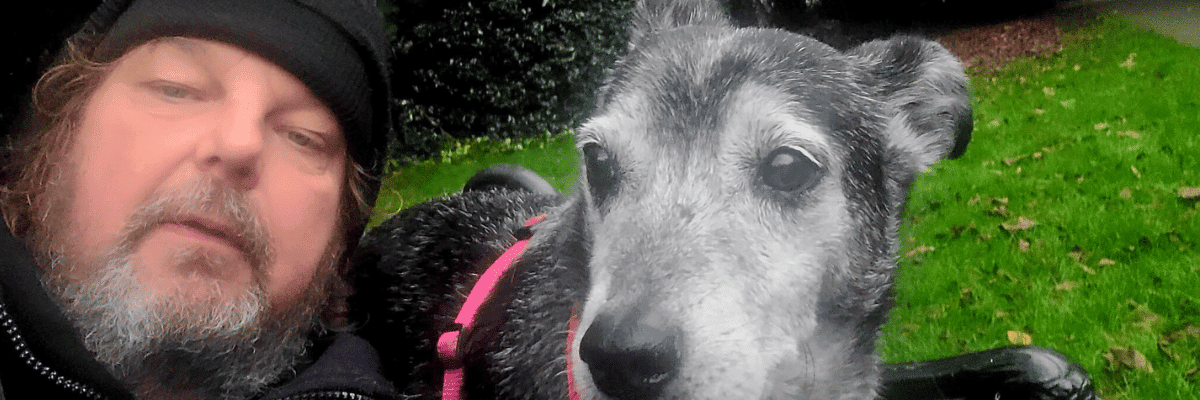
Watch your dog during the walk, after the walk and the following morning.
Possible warning signs include:
- falling behind
- repeatedly stopping
- sitting or lying down
- struggling to stand after resting
- limping
- dragging or scuffing a paw
- unusually heavy panting
- reluctance to continue
- struggling with steps
- appearing unusually tired at home
- stiffness later in the day
- not wanting to walk the following morning
A sudden change needs veterinary advice.
Persistent lameness or discomfort should also be checked rather than treated as an unavoidable part of ageing.
Activity diary
A short diary can help you notice patterns.
Record:
- How long was your dog out
- where you walked
- the weather
- how much sniffing they did
- any signs of discomfort
- how they moved that evening
- how they appeared the next morning
This information can also be useful when speaking to your vet.
Gentle games for elderly dogs
Senior dogs can still play and learn.
The activity needs to suit their mobility, confidence and energy level.
Find the treat
Place a few pieces of your dog’s normal food around one room.
Make the first pieces easy to find.
You can gradually use slightly more challenging hiding places as your dog understands the game.
Keep food at a comfortable height. Do not encourage a stiff dog to stretch, climb or crawl under furniture repeatedly.
Which hand?
Place a treat in one hand.
Hold out both closed hands and let your dog investigate.
Reward them when they indicate the correct hand.
This is simple, low-impact and suitable for a short activity while you are sitting together.
Toy recognition
Some dogs learn the names of their favourite toys.
Start with one familiar toy.
Say its name, encourage your dog to touch it and reward them.
You can add a second toy later.
Gentle training
Older dogs can still enjoy learning.
Try short sessions involving:
- touching your hand with their nose
- looking at you when you say their name
- settling on a mat
- finding a visible threat
- placing their chin on your hand
- allowing gentle equipment checks
Avoid repeatedly asking a dog with stiff joints to sit, lie down and stand up.
Training should be comfortable, not a physical workout.
The RSPCA notes that training can provide mental stimulation and help prevent boredom.
Indoor activities are useful when:
- The weather is unsuitable
- Your dog has already had their walk
- They need a quieter day
- They are recovering under veterinary guidance
- Their mobility is limited
Enrichment should not mean constantly giving your dog more food.
Use part of their normal daily food allowance where possible.
Scatter feeding
Scatter a small amount of dry food across a safe, non-slip floor.
Keep the pieces fairly close together when introducing the activity.
You can also scatter food across a towel or snuffle mat.
Avoid sending a dog with poor mobility across slippery laminate or tiles.
Read my article on Ditch the bowl
Rolled-towel search
Lay a towel flat.
Sprinkle a few pieces of food across it and roll it loosely.
Let your dog use their nose to investigate and unroll it.
Supervise the activity and stop if your dog begins chewing or swallowing the towel.
Cardboard-box search
Place scrunched paper or smaller empty boxes inside a larger box.
Add a few pieces of food.
Keep the box shallow enough for your dog to reach comfortably.
Remove tape, staples, packaging and anything your dog might swallow.
You may be interested in my guide on creating a scent box
Muffin tin game
Place food in some of the spaces of a muffin tin.
Leave the food uncovered at first.
Once your dog understands the game, you can loosely cover a few spaces with suitable toys or balls.
Make sure the tin does not slide across the floor.
Read my guide on the Muffin team game for more info
Lick mats and food toys
A lick mat or simple food toy can provide a calm activity.
Choose an option that is:
- easy for your dog to use
- large enough not to swallow
- simple to clean
- appropriate for their teeth
- unlikely to slide around
Do not make every activity difficult.
A senior dog does not need to be frustrated before they receive their food.
Snuffle mats
A snuffle mat can give an older dog a comfortable way to search for food.
Look for:
- a non-slip base
- machine-washable material
- fabric that does not pull out easily
- a size your dog can use without climbing on it
Supervise your dog, particularly if they chew fabric.
Chewing
Some senior dogs still enjoy chewing, but their teeth may be more vulnerable.
Speak to your vet if you are unsure what is suitable.
Avoid assuming that a product described as natural is automatically safe. Hard chews may damage teeth, while small or broken pieces can become a choking risk.
I do not recommend rawhide.
Making your home easier for an older dog
Exercise is not only about walks.
Your dog needs to move safely around their home too.
Add non-slip surfaces
Slippery floors can make an older dog less confident about standing or walking.
Consider using:
- non-slip runners
- rubber-backed mats
- washable rugs
- secure mats beside beds and bowls
Make sure rugs lie flat and do not create a new trip hazard.
Make resting places easy to reach
Your dog should not need to climb stairs or jump onto furniture every time they want to rest.
Place comfortable beds in the rooms where your dog spends time.
A bed does not need to be heavily marketed as orthopaedic to be useful. It needs to be:
- comfortable
- supportive
- easy to enter
- washable
- placed away from draughts
Review steps and stairs.
Some dogs need help managing:
- front steps
- garden access
- stairs
- getting into a car
- climbing onto furniture
A ramp may help some dogs, but it must be stable, suitable for the space and introduced carefully.
Speak to your vet or a qualified canine physiotherapist when your dog has significant mobility problems.
Keep water accessible
Place water where your dog can reach it without needing to travel far or use stairs.
Use a stable bowl that will not slide when your dog drinks.
Think about eyesight
An older dog with reduced eyesight may find it harder when furniture is frequently moved.
Try to keep:
- Walking routes through the home are clear
- bowls in a consistent place
- beds in familiar locations
- nighttime areas gently lit where needed
Useful products for senior dogs
You do not need to buy a cupboard full of equipment.
These are practical items that may make everyday routines easier.
| Product | Why it may help | What to check |
|---|---|---|
| Non-slip runner | Gives more secure footing on smooth floors | It should lie flat and have a reliable non-slip backing |
| Washable throw | Protects beds and furniture and is easy to clean | Avoid loose threads and thick folds |
| Lick mat | Provides a simple food-based activity | Choose the right size and supervise use |
| Easy puzzle feeder | Adds gentle problem-solving to meals | Avoid puzzles that cause frustration |
| Snuffle mat | Encourages slow searching and sniffing | Use one with a secure, washable base |
| Food-stuffable toy | Can provide a calm indoor activity | Check size, condition and difficulty |
| Comfortable harness | May provide better control on slower walks | Fit matters more than marketing claims |
| Quick-dry towel | Helps after wet or cold walks | Choose one that is easy to wash |
Non-slip runner
Useful for dogs who hesitate on laminate, wooden floors or tiles.
AMAZON AFFILIATE LINK: non-slip floor runner suitable for pet homes
Lick mat
Choose a straightforward design rather than one with very deep or difficult sections.
Lick mat – Amazon
Food-stuffable toy
A correctly sized Kong can be useful for part of a meal.
Make the filling easy to remove when introducing it.
Snuffle mat
This can be useful for dogs who enjoy searching but do not want energetic play.
Washable non-slip snuffle mat with suction cups – Amazon link
Comfortable harness
A secure, well-fitted harness can be useful for calm walking.
It should not restrict shoulder movement, rub behind the front legs or encourage you to pull your dog along.
Here is a link to my recommended kit and services page
What I would avoid
I would not recommend buying equipment simply because it is labelled for senior dogs.
I would also avoid:
- retractable leads
- choke, check or prong collars
- shock collars
- Slippery indoor games
- repeated ball chasing
- activities involving sharp turns
- forcing a tired dog to complete a route
- hard chews without considering dental health
- supplements marketed as a replacement for veterinary care
Repeated jumping and sharp turning can place additional strain on a dog’s body. A dog already showing pain, weakness, or changes in mobility needs individual veterinary advice.
Older dogs often cope best when their day remains predictable.
A simple routine may include:
- meals at familiar times
- regular toilet opportunities
- shorter daily walks
- rest after activity
- calm enrichment
- consistent bedtime arrangements
Routine becomes particularly important when someone else is caring for your dog.
Leave clear information about:
- medication
- meals
- toilet habits
- usual walk length
- preferred routes
- signs of tiredness
- where your dog sleeps
- How they cope with stairs
- What to do if they refuse a walk
- your vet’s details
[INTERNAL LINK: What to pack and prepare for your dog’s staycation]
House sitting for an elderly dog
Kennels, unfamiliar dogs and a major change of surroundings can be difficult for some senior dogs.
House sitting allows your dog to remain:
- in their own home
- near their usual bed
- on familiar walking routes
- close to their normal garden
- within their established routine
I provide live-in house sitting for suitable clients, allowing dogs to stay in their familiar environment while their owners are away.
Calm one-to-one walks for older dogs.
Some senior dogs still enjoy going out but no longer suit fast group walks.
My solo walks are carried out on foot from your dog’s home.
There are:
- no vans
- No group walks
- no pressure to keep up
- no fixed route that must be completed
Your dog can walk at a pace that suits them.
That may mean a steady local walk with plenty of sniffing. On another day, it may mean a shorter toilet walk followed by calm company at home.
I currently offer solo dog walks in Finchley, Muswell Hill and nearby areas – so please ask,
When to speak to your vet
Contact your vet when you notice:
- sudden reluctance to walk
- new or persistent limping
- difficulty standing
- crying or reacting when touched
- unexplained heavy panting
- collapsing
- dragging a leg or paw
- changes in appetite
- confusion or disorientation
- sudden toileting changes
- a significant change in sleep or behaviour
Changes in appetite, movement, awareness or behaviour can have several causes and should not automatically be blamed on ageing.
Frequently asked questions
Should elderly dogs still be walked?
Most elderly dogs still benefit from regular opportunities to walk, sniff and explore. The distance and pace may need to be reduced. Follow your vet’s advice when your dog has pain, mobility problems or another health condition.
How long should I walk an older dog?
There is no set time that suits every senior dog. Start with a duration your dog handles comfortably, and observe how they move during the walk, later that day, and the following morning.
Are two short walks better than one long walk?
For many senior dogs, shorter, more frequent outings are easier to manage than a single long walk. Your dog’s individual health and routine should guide the decision.
How can I entertain an elderly dog indoors?
Try scatter feeding, simple scent searches, an easy food toy, a lick mat, the muffin tin game or a short training session. Keep activities comfortable and avoid slippery floors.
Is sniffing good for older dogs?
Sniffing gives older dogs a mentally engaging way to explore without needing fast or high-impact movement. Allow plenty of time rather than measuring every walk by distance.
What exercise is best for a dog with arthritis?
A dog with arthritis needs an exercise plan based on veterinary advice. Regular controlled movement may be helpful, but the right amount depends on the dog’s pain, mobility, weight and other health conditions.
Should I let my old dog rest instead of walking?
Rest is important, but stopping all activity without veterinary advice can contribute to reduced fitness and muscle loss. Gentle, appropriate movement is usually preferable where the dog is medically able to exercise.
Are puzzle toys suitable for senior dogs?
Yes, provided they are easy enough to use and do not cause frustration. Choose simple puzzles and use part of your dog’s normal food allowance.
How do I know if my senior dog is in pain?
Possible signs include limping, stiffness, reluctance to move, difficulty standing, altered sleep, changes in behaviour or reacting when touched. Contact your vet when you notice a new or persistent change.
Final thoughts
Getting older does not mean your dog has stopped needing interesting and enjoyable days.
They may not want to walk as far.
They may need more rest.
They may choose sniffing over running.
That is fine.
A slower walk can still be a good walk.
A simple scent game can still be rewarding.
A quiet afternoon with familiar company can still be the best part of their day.
The aim is not to keep doing everything your dog managed when they were younger.
It is to help them keep doing the things they still enjoy, in a way that feels safe and comfortable.
Disclaimer
This guide provides general information and is not a substitute for veterinary diagnosis or treatment. Speak to your vet before changing the exercise routine of a dog with pain, arthritis, breathing difficulties, heart problems, weakness or other medical concerns. Stop the activity and seek veterinary advice if your dog shows sudden pain, collapse, severe breathing difficulty or a significant change in mobility.
About Del Chambers
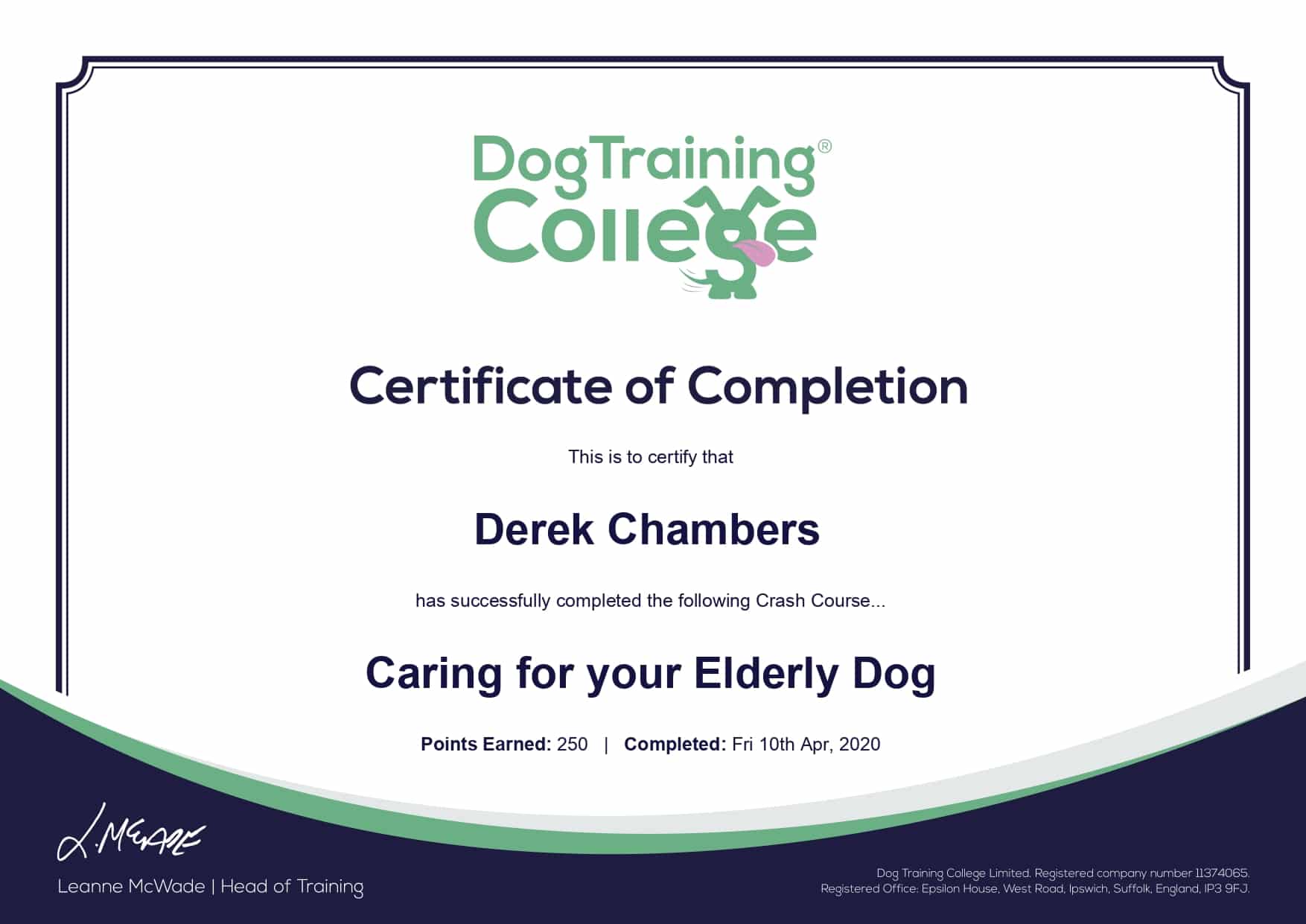
Derek “Del” Chambers established Finchley Dog Walker in 2011. He provides calm, one-to-one dog walking and home pet care for dogs who need a more individual approach, including older, rescue, nervous and reactive dogs.
Del holds an Ofqual Level 3 canine first aid qualification and has completed training in canine body language and working with reactive dogs. His walks focus on safe handling, sniffing, enrichment and allowing each dog to move at a pace that suits them.