Updated October 2026 | By Derek (Del) Chambers, Finchley Dog Walker
Going away on holiday doesn’t mean you need to fill your home with expensive cat toys or complicated gadgets to keep your cat entertained.
In fact, for many cats, the opposite is true.
Cats generally appreciate familiar surroundings, predictable routines and the freedom to choose what they want to do.
Their favourite sleeping spot, scratching post, hiding place or cardboard box may be far more important than the latest interactive toy.
I’ve been caring for pets professionally since 2011, and one thing I’ve learnt from visiting cats in their own homes is that every cat is different.
Some greet me at the door and demand attention before I’ve even put my bag down.
Others watch cautiously from the stairs.
And some prefer to remain in their favourite hiding place while I sort out their food, water and litter.
All of those responses deserve respect.
In this guide, I’ll look at simple ways to provide safe indoor enrichment while you’re away, which activities are suitable between visits, and how a cat sitter can help keep your cat’s routine familiar.
Remember: enrichment should support good care, never replace it.
If you’re planning a holiday, you may also find my Cat Care Advice in Finchley hub useful.
Affiliate disclosure: This article contains Amazon affiliate links. If you make a purchase through one of these links, I may earn a small commission at no additional cost to you. As an Amazon Associate, I earn from qualifying purchases. I only recommend types of products that fit my approach to safe, practical pet care.
Why indoor enrichment matters when you’re away
Cats are often described as independent animals.
While many are comfortable spending time on their own, that doesn’t mean they have no need for attention, activity or companionship.
Cats need opportunities to express natural behaviours, including:
- Scratching and stretching.
- Climbing and observing.
- Hiding somewhere comfortable.
- Exploring their surroundings.
- Searching for food.
- Playing and practising hunting behaviours.
- Resting without being disturbed.
- Choosing when to interact with people.
An interesting environment doesn’t necessarily require lots of toys.
It simply needs to offer appropriate choices.
A cardboard box can make a wonderful hiding place. A stable scratching post allows a cat to stretch. A familiar window ledge might provide hours of interest.
According to Cats Protection, cats benefit from opportunities to play, explore, hide and express their normal behaviour.
The challenge when you’re away is making sure those opportunities remain available without introducing unnecessary risks.
What enrichment is safe to leave for your cat?
Not every enrichment activity is suitable when your cat is unsupervised.
Some are best left available throughout the day. Others should be used only when someone is there to supervise.
| Activity | Between visits | Supervision needed? |
|---|---|---|
| Familiar scratching post | Usually suitable | Check stability and condition |
| Secure cat tree | Usually suitable | Inspect before departure |
| Favourite resting places | Yes | No, if safely accessible |
| Familiar cardboard hiding box | Usually suitable | Check for chewing or damage |
| Tested simple puzzle feeder | Sometimes | Depends on design and cat |
| Loose balls or sturdy cat toys | Sometimes | Only if previously used safely |
| Feather wand or fishing-rod toy | No | Yes |
| String, wool and ribbon | No | Yes, and store securely |
| Automated moving toys | Not automatically | Assess individually |
| Food-search games | Usually during visits | Recommended |
No toy is completely risk-free for every cat.
Before leaving anything available, consider whether your cat might chew, swallow, dismantle, or get tangled in it.
My rule is simple: don’t introduce anything unfamiliar on the day you leave.
Test new equipment well before your holiday so you can observe how your cat uses it.
1. Food puzzles and gentle searching games
Food-based enrichment is one of the easiest ways to encourage natural searching and problem-solving.
Cats would normally spend time locating and obtaining food.
A suitable puzzle feeder allows them to use some of those behaviours in a safe indoor setting.
Some cats enjoy nudging a ball to release biscuits. Others prefer a shallow puzzle tray with compartments.
You don’t need to make the activity difficult.
In fact, beginning with something easy is usually better.
A simple way to introduce a puzzle feeder
Start while you’re at home.
Place a few pieces of your cat’s normal dry food somewhere easy to reach in the feeder.
Allow them to investigate without encouragement or pressure.
If they understand the activity and appear to enjoy it, you can gradually increase the challenge.
However, if your cat becomes frustrated or walks away, simplify the puzzle.
Not every cat enjoys working for food, and that’s perfectly fine.
What about homemade food puzzles?
Some simple activities can be created using:
- An open egg box.
- A shallow muffin tray.
- A few large, open cardboard compartments.
- Several small feeding stations.
- A purpose-made feeding mat.
Remove staples, tape, string and loose pieces.
Always supervise homemade activities initially, particularly if your cat likes chewing cardboard or plastic.
I generally use these during a cat-sitting visit rather than leaving homemade puzzles out all day.
Choosing a suitable product
For cats who enjoy food puzzles, I prefer equipment that is stable, washable, easy to use and free from small detachable pieces.
An existing option on my website is this cat puzzle feeder on Amazon.
Check the current product details, suitability and design before buying.
Use part of your cat’s normal daily food allowance rather than adding lots of extra treats.
If your cat has diabetes, food allergies, a prescription diet or another medical condition affecting feeding, discuss changes with your vet first.
2. Scratching posts and scratching boards
Scratching is a normal part of cat behaviour.
It helps cats stretch, maintain their claws and leave scent and visual marks.
Some cats prefer tall vertical scratching posts.
Others love horizontal cardboard scratchers.
And some seem to believe the most expensive sofa in the house was purchased specifically for them.
The best scratching surface is one your cat will actually use.
What I recommend
Keep your cat’s established scratching posts in their usual positions.
Check that they are stable and not damaged.
If you’re buying a replacement, introduce it before your holiday rather than leaving a completely unfamiliar structure.
You can also consider a scratching tower that combines several activities, such as climbing, resting and scratching.
Here’s a good choice of cat scratching tower recommendations on Amazon.
Make sure the base is stable, and the structure suits your cat’s age, mobility and available space.
An older cat with arthritis may prefer a horizontal scratcher or lower resting platform.
3. Climbing, exploring and window watching
Many cats enjoy having somewhere elevated to watch their surroundings.
A familiar cat tree, secure shelf or favourite window ledge can be a useful part of their environment.
Some cats love watching birds, people and passing traffic.
Others are less interested.
And some become stressed when unfamiliar cats appear outside their window.
Watch your cat’s reaction rather than assume every activity is enjoyable.
A cat tower can encourage climbing
Check for hazards
Before travelling, make sure:
- Cat trees and shelves are stable.
- Window platforms are secure.
- Blind and curtain cords are inaccessible.
- Your cat has a safe way down.
- Windows cannot be pushed open or accessed dangerously.
- Older cats can reach favourite spots comfortably.
- Fragile objects cannot easily be knocked down.
I wouldn’t rearrange furniture or introduce new climbing equipment just before leaving.
Cats can be surprisingly particular about where things belong.
4. Hiding places are enrichment too
A hiding cat isn’t necessarily an unhappy cat.
For many cats, being able to retreat somewhere quiet is an important part of feeling secure.
This can be especially relevant for nervous or rescue cats.
Useful hiding places include:
- A familiar cardboard box.
- A covered cat bed.
- A quiet space beneath furniture.
- An accessible cat carrier that the cat already uses voluntarily.
- A favourite spot behind a sofa.
- A familiar quiet room.
Avoid blocking established hiding places when preparing for your holiday.
Also, tell your cat sitter where your cat normally hides.
That way, if your cat chooses not to come out during a visit, the sitter can still approach welfare checks calmly and appropriately.
Never force a nervous cat out of its hiding place simply to make it play or interact.
Some cats become more confident when they’re given space and predictable routines.
5. Safe toys to leave between cat-sitting visits
Leaving a small selection of familiar toys may help keep things interesting between visits.
I generally favour simplicity.
A sturdy ball, familiar toy mouse or suitable kicker toy may be enough.
But it’s important to consider the individual cat.
A cat who has safely played with a particular toy for years may be very different from a kitten who chews and swallows almost anything.
Toys I would put away
I would not leave the following available unsupervised:
- Fishing-rod toys.
- Feather wands with strings.
- Wool or yarn.
- Ribbon.
- Loose elastic.
- Toys with small detachable eyes or decorations.
- Damaged toys with exposed stuffing.
- Toys containing loose batteries.
- Anything your cat has previously tried to swallow.
String-like objects can be particularly dangerous if swallowed.
If you suspect your cat has swallowed string, contact a vet promptly. Do not pull visible string from their mouth or bottom.
Let the sitter provide interactive play
Interactive toys are often better used during a visit.
Depending on your cat’s preferences, I might use a familiar wand toy, roll a ball or encourage a short searching game.
I always put supervised toys away afterwards.
And I don’t insist on playing if the cat would rather sit quietly.
Sometimes companionship is enough.
6. Enrichment for nervous and rescue cats
Nervous cats may find changes particularly difficult.
An unfamiliar person entering the home can already be a significant event.
Adding lots of new toys, rearranging their environment or changing feeding equipment at the same time may create unnecessary pressure.
For these cats, I would prioritise:
- Familiar feeding places.
- Established hiding spots.
- The same food and litter.
- Predictable visit times.
- Quiet movement around the home.
- Calm interaction.
- Existing scratching and resting areas.
- Allowing the cat to approach when ready.
A cat sitter should understand that trust may develop gradually.
On an early visit, a nervous cat may simply watch from another room.
Later, they might begin approaching the doorway.
Eventually, they may decide to come closer.
There is no need to rush.
And there is certainly no need to force physical contact.
I use this approach during my cat-sitting visits in Finchley, particularly with cats who are unsure about unfamiliar people.
7. Enrichment for kittens and senior cats
Age can make a big difference to the type of enrichment your cat needs.
Kittens
Kittens are curious and often investigate everything.
That can include things we’d rather they didn’t.
They may chew cords, climb furniture, squeeze into small spaces or dismantle toys.
For kittens, safe supervision is particularly important.
I would favour sturdy toys, simple games, safe climbing opportunities and short supervised play sessions.
Very young kittens also need more frequent feeding, care and interaction than healthy adult cats.
Senior cats
Older cats may still enjoy play and exploration, but they might need some adjustments.
For example:
- Lower resting platforms.
- Easily accessible scratching boards.
- Shallow food puzzles.
- Comfortable beds.
- Non-slip surfaces.
- Shorter play sessions.
- Food and water within easy reach.
Some senior cats have arthritis or other conditions that make jumping uncomfortable.
I wouldn’t encourage them to climb unnecessarily just to reach food or enrichment.
If your cat suddenly becomes less active, stops jumping or changes their normal behaviour, speak to your vet.
8. Enrichment in homes with more than one cat
Multi-cat households need a little extra thought.
Just because cats live together doesn’t mean they enjoy sharing everything.
One cat may guard a favourite window ledge.
Another may prevent access to food.
Sometimes this happens without obvious fighting.
Where possible, provide suitable separate resources, including:
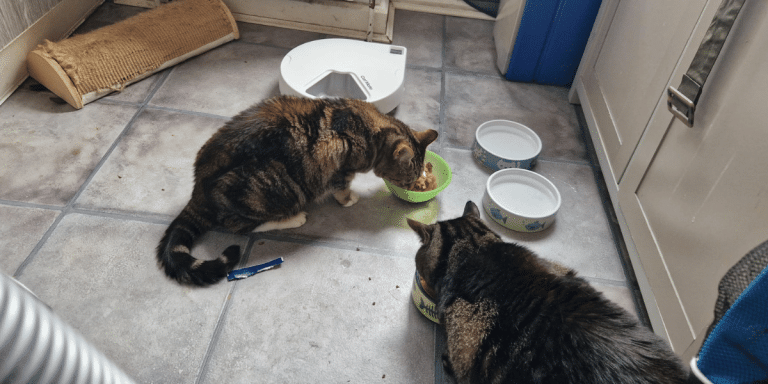
- Food bowls and feeding areas.
- Water bowls.
- Litter trays.
- Scratching posts.
- Resting places.
- Hiding places.
- Enrichment activities.
A general starting point is one litter tray per cat, plus an additional tray, placed in suitable separate locations.
Also introduce puzzle feeders carefully.
One cat may eat all the food while another waits nearby.
Your sitter needs to know which cat eats what and whether meals need to be served separately.
9. What should your cat sitter do during visits?
Enrichment isn’t just about leaving equipment around your home.
A good cat sitter can provide appropriate interaction while also keeping an eye on your cat’s wellbeing.
During my visits, depending on the cat and the arrangements agreed with the owner, I may:
- Refresh food and water.
- Clean litter trays.
- Check whether the cat has eaten.
- Observe behaviour and general wellbeing.
- Provide supervised play.
- Refresh an established puzzle feeder.
- Rotate familiar toys.
- Check scratching posts and other equipment.
- Offer quiet companionship.
- Groom the cat if appropriate and welcomed.
- Send photographs and updates.
Some cats want to spend most of the visit playing.
Others are perfectly content to sit nearby while I talk to them.
And some prefer that I get on with the practical jobs and leave them in peace.
The important thing is that the visit suits the cat.
How often should someone visit?
Enrichment equipment cannot replace regular human care.
Cats Protection recommends at least twice-daily visits for cats staying at home during holidays, with more frequent care where necessary.
For more detailed considerations, including age, health, medication and routine, see my How Often Should a Cat Sitter Visit? guide.
You may also find Leaving Cats Alone Overnight helpful.
10. Preparing your cat’s home before going away
A little preparation can make things easier for your cat and whoever is caring for them.
My pre-holiday enrichment checklist
- Keep familiar beds and hiding places accessible.
- Check scratching posts and cat trees for damage.
- Remove unsafe or damaged toys.
- Put fishing-rod toys and string away.
- Test puzzle feeders well before travelling.
- Leave several safe water sources.
- Keep food and litter arrangements familiar.
- Make sure windows and doors are secure.
- Check that cords, chemicals and hazardous plants are inaccessible.
- Leave clear instructions for the sitter.
- Provide veterinary and emergency contact details.
- Explain which toys may only be used under supervision.
A water fountain or automatic feeder may help maintain part of an established routine, but both can fail.
I would always provide a suitable backup and arrange proper care visits.
For a fuller preparation list, see What to Leave for Your Cat Sitter.
Do you need to spend money on cat enrichment?
Not necessarily.
Some of the most useful enrichment opportunities are already in your home.
A familiar cardboard box, comfortable window ledge, stable scratching post and a few favourite toys can provide plenty of interest.
If you do want to buy something, I would start by identifying what your cat already enjoys.
A cat who likes searching for biscuits may enjoy a simple food puzzle.
A cat who regularly scratches the carpet may prefer a horizontal scratching board.
A cat who enjoys climbing might benefit from a stable cat tree.
Buying lots of products doesn’t automatically create a better environment.
I would rather recommend one suitable item that your cat genuinely enjoys than five expensive gadgets that end up gathering dust.
For a broader comparison of holiday-care equipment, including food and water products, read my Best Cat Care Products for When You Go Away.
Frequently asked questions
How can I keep my cat entertained while I’m on holiday?
Provide familiar scratching, hiding, climbing and resting opportunities alongside safe, tested toys. A reliable cat sitter can add supervised play, gentle enrichment and companionship during regular welfare visits.
Is it safe to leave puzzle feeders out for cats?
Some tested puzzle feeders may be suitable, depending on their design and your cat’s behaviour. Don’t leave a new feeder unsupervised or rely on one to provide your cat’s entire meal without appropriate checks.
Should I buy new toys before going away?
If you’d like to introduce new toys, do so well before travelling. Watch how your cat uses them and remove anything that could break, cause entanglement or be swallowed.
Can I leave my cat with an automatic feeder?
An automatic feeder may help maintain an established feeding routine, but it can jam, lose power or fail to dispense the correct amount. It does not replace regular visits or welfare checks.
What if my cat doesn’t want to play with the sitter?
That’s perfectly fine. Some cats prefer quiet company or may choose to remain hidden. A good sitter should respect their preferences while still checking their welfare.
Is home cat sitting better than a cattery?
Many cats benefit from remaining in familiar surroundings, especially those who are nervous or strongly attached to routine. However, a suitable cattery may be a good option for some cats. Read my Cat Sitting Versus Catteries Guide for a fuller comparison.
Can enrichment stop my cat feeling lonely?
Enrichment can help provide interesting activities, but it cannot replace appropriate human attention and care. Some cats are very sociable, while others prefer a more independent routine.
Can I leave a kitten with the same enrichment as an adult cat?
Not necessarily. Kittens often need closer supervision, more frequent feeding and age-appropriate toys. Their care arrangements should reflect their stage of development.
Cat sitting in Finchley and Muswell Hill
If you’re planning a holiday and would prefer your cat to remain at home, I provide calm, personalised cat-sitting visits in Finchley and surrounding areas, including Muswell Hill and Bounds Green, subject to availability.
My approach is simple.
I follow your cat’s familiar routine, respect their preferences and provide appropriate care without forcing interaction.
Visits can include feeding, fresh water, litter care, agreed medication, play, enrichment, companionship, basic home checks and photographs or updates.
Whether your cat is confident and affectionate or would rather keep their distance, I aim to make their time without you as comfortable and predictable as possible.
Find out more about Cat Sitting in Finchley or contact me to discuss your cat’s needs.
Final thoughts
Keeping your cat occupied while you’re away doesn’t have to involve complicated equipment or expensive toys.
Start with what your cat already knows and enjoys.
Keep familiar resting, scratching and hiding places available.
Test any new equipment well before your holiday.
Remove unsafe toys.
Make sure a reliable person visits regularly to provide proper care and check that everything is as it should be.
Some cats will enjoy a food puzzle.
Others will prefer a familiar toy mouse.
And some will decide that the cardboard box your expensive new cat tree arrived in is the most exciting thing you’ve ever bought them.
That’s cats for you.
What matters most isn’t how much enrichment you provide.
It’s whether it is safe, appropriate and enjoyable for the individual cat.
Further reading and trusted advice
- Cat Care Advice in Finchley
- How Often Should a Cat Sitter Visit?
- Leaving Cats Alone Overnight
- What to Leave for Your Cat Sitter
- Cats Protection: Going on Holiday Without Your Cat
Veterinary and safety disclaimer: This article provides general cat-care information and is not a substitute for veterinary advice. If your cat stops eating, has difficulty urinating, may have swallowed part of a toy, or shows signs of serious illness, contact your vet promptly. Difficulty urinating is an emergency.
Originally published October 2021. Updated July 2026 and reviewed October 2026.
.