
Rainy days in Finchley can drag on—wet pavements, muddy parks, and dogs bouncing off the walls by lunchtime.
It’s not just about “burning energy”. Many dogs, particularly rescues or sensitive types, struggle more mentally than physically when their routine changes.
So this guide is about what actually helps. Not just keeping your dog busy, but keeping them settled.
This page may contain affiliate links, including Amazon links. As an Amazon Associate, I earn from qualifying purchases. If you choose to buy through these links, I may earn a small commission at no extra cost to you. It helps support the site and allows me to keep sharing practical dog care advice.
If you found this guide helpful, you can support the site via Buy me a coffee.
Why Rainy Days Are Harder Than You Think
Most owners assume the problem is “too much energy”.
But what I often see is:
• frustration from a broken routine
• lack of sniffing and exploration
• reduced mental stimulation
• tension building through the day
In North London, many dogs are used to regular walks through places like Highgate Woods or Parkland Walk. When that suddenly stops, they don’t just get bored. They get unsettled.
This is especially true for:
• rescue dogs
• nervous or reactive dogs
• working breeds
• younger dogs under 3
And this is where indoor enrichment matters.
What I Focus On Instead of Just Exercise
On rainy days, I don’t try to “replace the walk”.
I shift the goal.
I focus on:
• calming the nervous system
• encouraging natural behaviours
• creating structure
• preventing overstimulation indoors
That’s what actually helps dogs settle.
Simple Indoor Activities That Work
1. Scatter Feeding (My Go-To)
This is the first thing I suggest to most clients.
Instead of feeding from a bowl, I scatter food across the floor or a snuffle mat.
Why it works:
• encourages sniffing
• slows eating
• lowers arousal
• gives the dog a clear task
For dogs in flats or smaller homes, I’ll often use a simple rolled-up towel.
Common mistake:
People rush this. Let your dog take their time. That’s the whole point.
2. Lick Mats for Calm Behaviour
Licking has a calming effect on dogs. I use this a lot with anxious or over-alert dogs.
You can spread:
• plain yoghurt (xylitol-free)
• soaked kibble
• dog-safe pâté
A lick mat (Amazon affiliate link) can buy you 20–30 minutes of proper calm.
I often recommend this before leaving the house or during heavy rain when walks are delayed.
3. Food Puzzles That Don’t Cause Frustration
Not all puzzle toys are helpful.
Some wind dogs up if they’re too difficult.
I look for:
• simple designs
• quick wins
• low frustration
A basic interactive puzzle toy (Amazon affiliate link) is usually enough.
If your dog starts pawing, whining, or giving up, it’s too hard.
4. Indoor Scent Games (Highly Underrated)
This is one of the best replacements for outdoor walks.
Start simple:
• hide treats around one room
• let your dog watch at first
• gradually increase difficulty
Then build up to:
• different rooms
• using favourite toys
• short “find it” sessions
You could then try to make a scent box for your dog
This taps into natural behaviour far more than throwing a ball indoors.
5. Calm Tug (Done Properly)
Tug can be useful, but only if it stays controlled.
I use tug to:
• build engagement
• practise start/stop cues
• release tension
Rules I follow:
• clear start cue
• frequent pauses
• calm ending
An interactive tug toy (Amazon affiliate link) is really good.
If your dog gets over-aroused, stop early.
6. Short Training Sessions That Build Focus
Rainy days are perfect for low-pressure training.
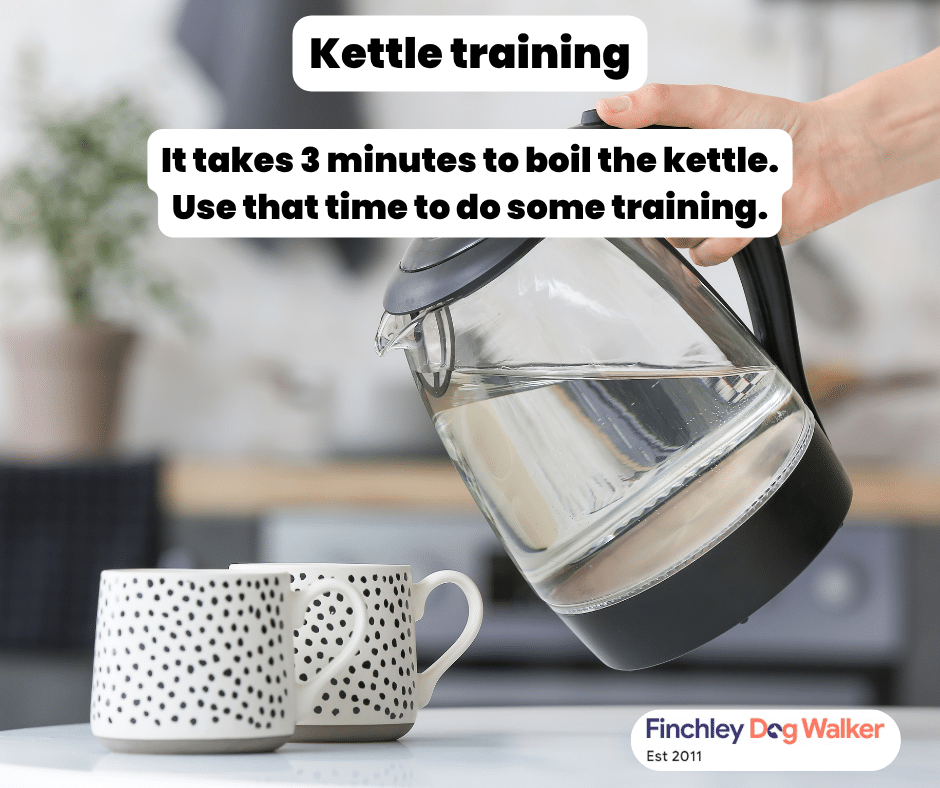
Not long sessions. Just 3–5 minutes at a time, and can even be whilst you boil the kettle
I focus on:
• recall indoors
• place training
• calm lead handling
• name response
This is especially helpful for dogs that struggle outside.
What I Avoid on Rainy Days
This is just as important.
Overstimulating Games Indoors
Constant ball throwing or chasing games can:
• increase arousal
• create frustration
• lead to barking or pacing
I see this a lot after wet weekends in Finchley.
Replacing Walks With Chaos
Trying to “wear your dog out” indoors often backfires.
You end up with:
• overtired behaviour
• inability to settle
• more demand barking
Ignoring Mental Stimulation
A quick toilet walk in the rain isn’t enough.
Dogs still need:
• sniffing
• problem solving
• structure
Can You Still Walk Your Dog in the Rain?
Yes. And often you should.
But I adjust how I do it.
In places like Coldfall Woods or Muswell Hill, I’ll:
• shorten the walk
• avoid muddy, high-traffic areas
• focus on sniffing rather than distance
• keep things calm and steady
For some dogs, a 20-minute slow walk is better than no walk at all.
What Equipment Actually Helps
You don’t need loads, but a few things make a big difference.
From experience, these are worth having:
• a well-fitted harness for control in wet conditions
• a long line for safe sniffing in quieter areas
• a waterproof dog coat for short-haired or older dogs
• a towel by the door (sounds obvious, but often overlooked)
You’ll find similar recommendations from UK trainers and walkers, including guidance from organisations like the RSPCA on safe, comfortable dog care in different weather conditions.
Real Behaviour Changes I See on Rainy Weeks
After a few days of bad weather, I often notice:
• more pulling on the lead
• lower frustration tolerance
• increased barking at home
• difficulty settling after walks
This isn’t “bad behaviour”.
It’s unmet needs.
Once owners add even one or two enrichment activities, things usually improve within a few days.
Safety First on Wet Days
A few things I always keep in mind:
• Slippery pavements can cause injuries
• Wet dogs get cold faster than people expect
• muddy areas increase the risk of slipping or ingesting debris
For older dogs or those with joint issues, I’m even more cautious.
If you’re unsure about mobility or health concerns, speak to your vet. This guide is based on experience, not diagnosis.
If Your Dog Still Struggles Indoors
Some dogs don’t switch off easily.
Especially:
• high-drive breeds
• recent rescues
• dogs with anxiety
In those cases, I focus more on:
• routine consistency
• predictable feeding times
• calm interaction
• reducing stimulation in the home
Sometimes it’s not about adding more.
It’s about doing less, but better.
FAQ: Rainy Day Dog Care
Most do, but it depends on the dog. Short, calm walks are often enough.
Focus on sniffing, licking, and problem-solving rather than high-energy games.
They help, but shouldn’t replace all interaction or outdoor time.
Don’t force it. Use enrichment indoors and try again later.
Yes. Many dogs become more restless or frustrated when routines change.
A Calm Way to Handle Rainy Days
Rain doesn’t have to mean chaos at home.
A few small changes can make a big difference.
And if you’re struggling to manage your dog’s needs during busy weeks or bad weather, I offer calm, one-to-one solo walks across Finchley and North London. I also support rescue dogs, provide house-sitting and cat-sitting where needed.
No rush. Just steady, thoughtful care that works for your dog.
