Throwing a stick for your dog might seem like one of the most natural things to do on a walk.
You find a stick, throw it across the grass and your dog races after it.
I’ve seen plenty of dogs who absolutely love this game.
But there is a problem.
Throwing sticks can cause serious injuries to dogs, including cuts to the mouth, splinters, choking and potentially life-threatening damage to the throat or neck.
The good news is that you don’t need to give up playing with your dog.
Alternatives avoid the specific dangers of wooden sticks. And for some dogs, the best alternative isn’t another object to throw at all.
I’ve been walking and caring for dogs professionally around Finchley and North London since 2011. My approach is to choose games that suit the individual dog, rather than assume every dog needs to run after something.
Sometimes that means a short retrieve with a suitable toy. Other times, it means a gentle tug game, hiding a toy, or letting a dog enjoy a proper sniff around the woods.
Here is what I recommend, what I avoid and how to help a dog who constantly picks up sticks.
Summary
Throwing wooden sticks can cause serious mouth, throat and neck injuries in dogs. Safer alternatives include appropriately sized rubber retrieval toys, soft discs and suitable tug toys, although no toy is completely risk-free. Short, controlled games, scent searches and reward-based training can provide enjoyable enrichment without repeated high-speed chasing. If your dog suffers a suspected stick injury, seek veterinary advice promptly.
Table of contents
- Why is throwing sticks dangerous for dogs?
- What should you do if your dog is injured by a stick?
- What can you use instead of throwing sticks?
- 1. Dog-safe rubber balls
- 2. Soft flying discs
- 3. Rubber stick-shaped toys
- 4. Tug toys and interactive games
- 5. Scent games instead of chasing
- Is repeatedly throwing a ball good exercise?
- Three simple alternatives I would try on a walk
- How do I stop my dog picking up sticks?
- Choosing the right activity for your dog
- My recommended alternatives to stick throwing
- Frequently asked questions
- My final recommendation
- Need help making play and walks more enjoyable?
- Related guides
Why is throwing sticks dangerous for dogs?
The main problem is that wooden sticks are unpredictable.
A stick can bounce, break, land at an awkward angle or become lodged upright in the ground.
When a dog runs after it at speed, they may try to catch it before it has stopped moving.
That creates several risks.
Mouth and throat injuries
A dog can run directly onto a stick or catch it at an awkward angle.
This can cause cuts or puncture wounds inside the mouth, under the tongue or towards the back of the throat.
Some injuries are much more serious than they initially appear.
The British Veterinary Association has reported cases where dogs required extensive treatment after sticks penetrated their necks.
You can read the British Veterinary Association’s advice about stick-throwing injuries.
Splinters and infection
Wood can split into sharp fragments when a dog bites or chews it.
Splinters may become lodged in the gums, tongue or soft tissues.
Sometimes they are difficult to see.
A dog might appear relatively comfortable at first, then develop swelling, pain or infection later.
That is why I would never ignore a suspected puncture wound simply because the bleeding has stopped.
Choking and swallowed wood
Dogs may also chew sticks into smaller pieces and swallow them.
Fragments can create choking hazards or problems further along the digestive system.
Blue Cross explains these risks in its guide to dogs and sticks.
For me, the message is simple.
I would rather prevent a stick injury than have to deal with one afterwards.
What should you do if your dog is injured by a stick?
If your dog has been running with or chewing a stick and suddenly yelps, paws at their mouth or behaves unusually, stop the activity.
Possible warning signs include:
- Blood around the mouth or in saliva
- Repeated swallowing or gagging
- Excessive drooling
- Pawing at the face or mouth
- Difficulty eating or picking up toys
- Swelling around the jaw or neck
- Unusual tiredness or distress
- Breathing difficulties
If you suspect a stick has penetrated the mouth or neck, contact your vet urgently.
Do not pull out a stick embedded in your dog’s mouth, throat or neck. Doing so could cause further damage or serious bleeding.
Do not probe deeply into the mouth for fragments.
If your dog is struggling to breathe, this is an emergency. Contact your vet or emergency veterinary service immediately.
Even when your dog appears to recover quickly, a puncture injury can leave hidden fragments behind.
PDSA has documented cases where dogs developed significant swelling after a stick fragment became lodged under the tongue.
For more general emergency information, visit my Dog Health and First Aid Guide.
What can you use instead of throwing sticks?
There are several alternatives, but I would choose equipment based on what the individual dog enjoys and how they use toys.
Here is how I compare the main options.
| Alternative | Why consider it? | What to watch for |
|---|---|---|
| Rubber retrieval ball | Easier to inspect and less likely to splinter than wood | Size, choking, chewing and repetitive chasing |
| Ball on a rope | Useful for carrying and shared play | Rope damage, swallowing and unsuitable sizing |
| Soft dog flying disc | May suit dogs who enjoy retrieving | Jumping, twisting and hard landings |
| Rubber stick-shaped toy | Similar shape without wood splinters | Hardness, damage, size and how it lands |
| Tug toy | Interactive play without needing to throw | Teeth, joints, guarding and overexcitement |
| Scent or toy-search game | Can provide enrichment with less fast movement | Scavenging, unsuitable food and frustration |
None of these options is completely risk-free.
A well-made toy can still be unsuitable if it is too small, too hard, damaged or used in the wrong way.
My Guide to Choosing Safe Dog Toys explains what to check before buying.
1. Dog-safe rubber balls
If your dog loves carrying and retrieving, a suitable rubber ball may be a practical alternative to a wooden stick.
However, I would not automatically recommend constant ball throwing.
The first thing I check is the size.
A ball must be large enough that your dog cannot swallow it or get it lodged at the back of their mouth.
It should also be comfortable to carry and suitable for their chewing habits.
For some dogs, a larger ball with a rope attachment can be useful.
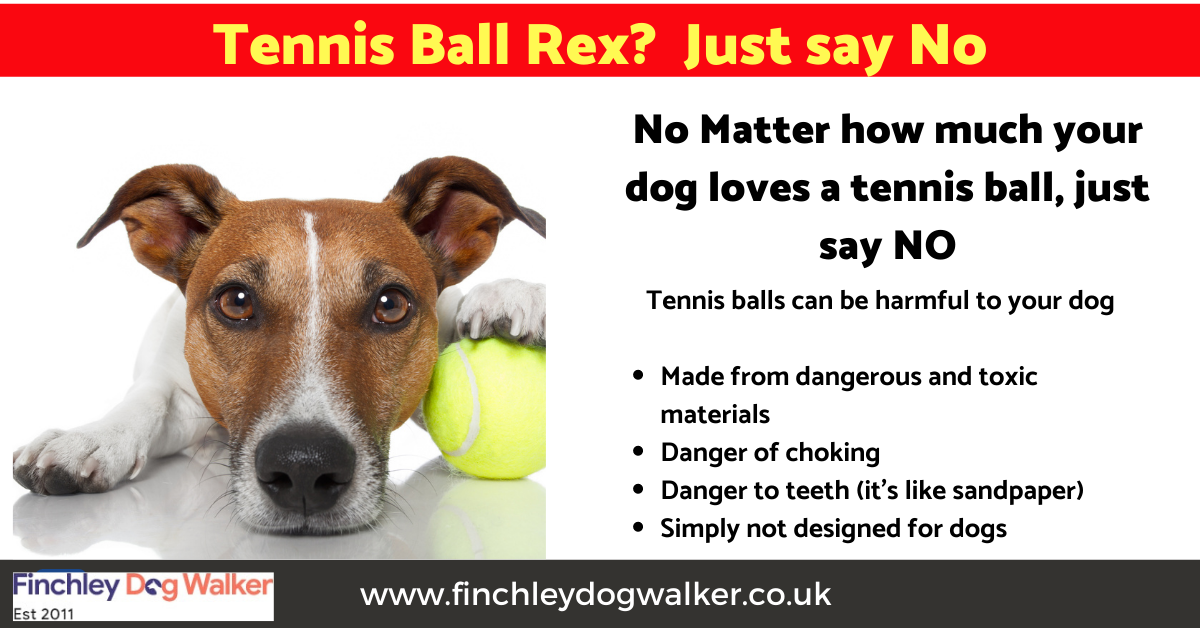
I avoid using ordinary tennis balls as chew toys, especially for dogs that repeatedly bite and compress them.
The felt on tennis balls can contribute to dental wear, and damaged balls may become a choking or swallowing hazard.
I explain this in more detail in my Are Tennis Balls Dangerous for Dogs? guide.
2. Soft flying discs
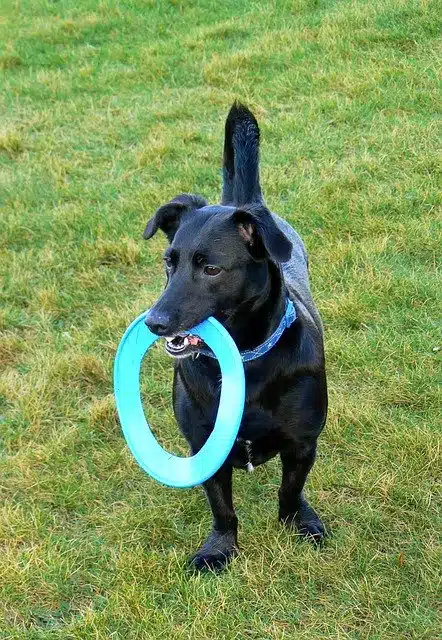
Some dogs enjoy retrieving a flying disc rather than a ball.
Choose a disc specifically designed for dogs, with a suitable size and material.
I would avoid hard, brittle plastic discs that could damage the mouth when caught.
But I would also be careful about how the game is played.
Repeated high catches, twisting in the air and awkward landings can place strain on the body.
For suitable dogs, a short, controlled retrieve along the ground may be preferable to encouraging repeated spectacular jumps.
I would avoid demanding aerial catches from puppies, older dogs, dogs with joint problems or those recovering from injury.
If your dog has a medical or exercise restriction, follow your vet’s instructions rather than assuming a softer toy makes fetch acceptable.
3. Rubber stick-shaped toys
Some owners want an alternative that looks and feels more like a stick.
A purpose-made rubber retrieval toy can avoid the splintering risks associated with wood.
However, I would still check the size, flexibility and construction.
A rigid toy can cause an injury if a dog catches it badly.
A damaged rubber toy may break into pieces that a dog could swallow.
And a long, narrow toy can still be dangerous if it becomes lodged awkwardly in the mouth.
I would choose a suitable product from a reputable manufacturer and use it as intended.
A rubber stick-shaped toy is an alternative to wood, but it doesn’t guarantee safe play.
4. Tug toys and interactive games
This is one of my favourite alternatives for dogs who enjoy playing with people.
Tug gives you an opportunity to play together without constantly throwing something across a field.
It can also become a useful reward during training.
For example, a dog might return when called and enjoy a brief game with their favourite tug toy.
I prefer short, enjoyable interactions rather than encouraging the dog to pull as hard as possible.
A suitable tug game should let the dog hold on comfortably, play without being jerked around, and have opportunities to pause.
I don’t lift dogs off the ground or drag them around by the toy.
I also avoid tug for dogs with relevant injuries or medical restrictions unless their vet has confirmed it is appropriate.
Some dogs adore tug. Others simply want to carry a toy or investigate it.
Both are fine.
My Guide to Playing Tug Safely With Your Dog explains how to introduce the game and teach a comfortable release.
5. Scent games instead of chasing
Sometimes I think owners underestimate how much enjoyment a dog can get from using their nose.
A dog does not always need to sprint across a field to have an interesting walk.
One alternative is to allow them to search for a favourite toy in a suitable, secure space.
Start by placing the toy somewhere obvious.
Allow your dog to investigate and find it.
If they enjoy the activity, you can gradually make the search slightly more interesting.
You can also try a simple food search using part of your dog’s normal food allowance on a clean, safe surface.
Check the area for discarded food, litter and anything else your dog should not eat.
Food searches may not suit dogs with certain allergies, medical diets, scavenging problems, or resource-guarding concerns.
Some dogs enjoy searching. Others would rather keep moving.
The aim is to discover what works for your dog.
You can find more alternatives in my 12 Dog Walk Enrichment Ideas.
Is repeatedly throwing a ball good exercise?
This is something I think deserves more attention.
Replacing a stick with a rubber ball removes some of the specific risks of wood, but it does not remove the physical demands of fetch.
Repeated sprinting, skidding, sudden changes of direction and jumping can put strain on a dog’s joints and muscles.
PDSA advises avoiding thrown-object games for dogs who are still growing, elderly, injured, arthritic, overweight or otherwise prone to joint problems.
Slippery or unstable ground adds further risk.
You can read PDSA’s advice about how much exercise dogs need.
For a healthy adult dog who enjoys retrieving, a few suitable, controlled retrieves may be appropriate.
However, I don’t believe a walk should become an endless ball-throwing session.
I would rather combine suitable movement with opportunities to sniff, explore, practise a useful skill and rest.
More excitement isn’t always more beneficial.
Three simple alternatives I would try on a walk
You don’t need a bag full of equipment.
Here are three easy ways to replace the familiar stick-throwing routine.
Let your dog find a favourite toy
Choose a suitable toy your dog already enjoys.
In a secure area, place it a short distance away while your dog watches.
Invite them to find it.
When they reach the toy, let them enjoy holding or carrying it.
You do not need to demand an immediate retrieve.
If your dog returns willingly, reward that.
This can be a useful starting point for dogs who enjoy toys but don’t need intense chasing.
Try a short, controlled retrieve
For dogs physically suited to retrieving, use an appropriately sized toy and a clear, level space.
Rather than throwing it as far as possible, roll it gently a short distance.
Let the dog collect it without a high jump or long sprint.
Encourage a return if they enjoy that part of the game.
Pause between turns.
Keep the game short, and finish while your dog is still comfortable.
Make recall part of the fun
You can also use a favourite toy as a reward.
Start somewhere quiet and safe.
Call your dog using their normal recall cue.
When they return, reward them with a brief, suitable game or another reward they enjoy.
Then allow them to continue exploring where it is safe.
This helps your dog learn that coming back to you doesn’t always mean the fun has ended.
My Dog Recall Training Guide explains how to build the skill gradually.
How do I stop my dog picking up sticks?
Some dogs are enthusiastic stick collectors.
They find them in parks, on woodland paths and under bushes.
Others develop the habit because picking up a stick has repeatedly led to an exciting game with their owner.
I wouldn’t approach this by chasing the dog, shouting, or trying to wrestle every stick from their mouth.
That could turn it into a game or make the dog more worried about losing what they found.
Start by changing the routine
If your dog expects you to throw sticks, stop doing it.
Bring a suitable toy if they enjoy carrying something.
Choose quieter areas when you are introducing new games, and avoid deliberately encouraging stick collection.
Practise a voluntary exchange
Start indoors with a safe, familiar, low-value toy.
Offer a worthwhile reward and allow your dog to release the toy voluntarily.
Reward the release and, when appropriate, return the toy.
Once your dog understands the process, introduce a consistent cue.
Build gradually rather than expecting a reliable response immediately outdoors.
Dogs Trust explains this approach in its Leave It and Fair Trade training guidance.
Reward the choices you want
If your dog notices a stick but chooses to follow you or investigate something else, reward that decision.
You want your dog to discover that leaving a stick alone can lead to something enjoyable.
Avoid repeatedly testing the behaviour in difficult situations before it has been learnt.
Be careful with resource guarding
Some dogs become defensive when people approach something valuable.
Signs can include stiffening, freezing, growling, moving away with an object or hurried swallowing.
If your dog guards sticks or other objects, don’t repeatedly practise taking things away.
Use safe management and seek help from your vet and an appropriately qualified behaviour professional.
Dogs Trust has detailed resource-guarding guidance.
If your dog has a dangerous object in their mouth, prioritise safety and obtain veterinary advice when needed.
Choosing the right activity for your dog
Not every dog enjoys the same games.
I think that is one of the most important things to remember.
A confident adult dog may enjoy a short game with a tug toy.
A nervous rescue dog may prefer carrying something familiar without being approached.
An older dog might enjoy investigating a nearby toy rather than chasing it.
A dog recovering from surgery may need restricted activity and should only undertake games permitted by their vet.
For these dogs, quieter enrichment and rest may be more appropriate than retrieving.
I don’t see that as missing out.
Play should suit the dog, not force every dog into the same routine.
If your dog repeatedly becomes frantic, struggles to disengage, avoids a toy or appears physically uncomfortable, make the activity easier or stop.
The wider principles are covered in my Practical Dog Enrichment Guide.
My recommended alternatives to stick throwing
You don’t need to buy lots of toys.
For most dogs, I would start with one suitable retrieval or carrying toy and, if the dog enjoys interactive play, one practical tug toy.
An appropriately sized retrieval toy
Choose a dog-specific toy in a size and material suited to your dog’s mouth and chewing habits.
A rubber ball or ball on a rope may be worth considering.
I would prioritise the right size and suitability over a particular brand.
Tug-E-Nuff interactive toys
Tug-E-Nuff produces interactive toys for dogs who enjoy shared play.
Its range includes toys for tugging, chasing and reward-based training.
I particularly like the idea of using a suitable toy as a reward for useful behaviours, rather than simply throwing something repeatedly.
Affiliate disclosure: The following link is an advertising affiliate link. If you make a qualifying purchase, I may earn a commission at no extra cost to you.
Explore Tug-E-Nuff interactive dog toys (affiliate link)
Check the individual product’s size, grip, materials and intended use.
Tug toys are not automatically suitable as unsupervised chew toys.
Compare before you buy
If you are unsure which toy would suit your dog, my Best Dog Enrichment Toys UK Comparison Guide looks at different types of enrichment equipment and their practical uses.
I would rather recommend one suitable toy than encourage you to buy several products your dog doesn’t need.
Frequently asked questions
Why shouldn’t you throw sticks for dogs?
Wooden sticks can splinter, cause cuts, become lodged in the mouth or throat, and cause serious penetrating injuries when dogs run onto them. Veterinary organisations recommend using suitable alternatives.
What is the safest alternative to throwing sticks?
No single toy is safest for every dog. A correctly sized rubber retrieval toy or suitable tug toy may avoid some of the risks associated with wood. For dogs that shouldn’t chase, scent searches and quieter activities may be more appropriate.
Are rubber sticks safe for dogs?
They can avoid the splintering risks associated with wood, but they are not completely risk-free. Choose the correct size and material, supervise play and remove damaged toys.
Are tennis balls safe for dogs?
Ordinary tennis balls can contribute to dental wear when repeatedly chewed. Balls that are too small, compressed or damaged may also become choking hazards. I prefer appropriately sized, dog-specific retrieval toys.
Is fetch bad for dogs?
Not necessarily. Short, appropriate retrieving games may suit some healthy dogs. Repetitive sprinting, sharp turns and jumping can be unsuitable for puppies, senior dogs and dogs with joint or mobility problems.
What if my dog loves carrying sticks?
Try offering a suitable carrying toy rather than repeatedly throwing sticks. Reward your dog for choosing it and practise voluntary exchanges. Avoid grabbing or chasing a dog who has picked up a stick.
Can I play tug instead of fetch?
For many dogs, yes. Tug can be enjoyable shared play when the toy, handling and activity suit the dog. Avoid pulling harshly, lifting the dog or continuing when they seem uncomfortable.
What if my dog gets very excited during games?
Shorten the game, reduce the difficulty and allow breaks. Consider whether sniffing, searching or another quieter activity would be more appropriate. If your dog struggles significantly to disengage or shows concerning behaviour, seek qualified help.
Should I let my dog chew wooden sticks?
I would avoid encouraging it. Wood can splinter and fragments may become lodged in the mouth or be swallowed. Offer a suitable alternative instead.
My final recommendation
I understand why people throw sticks.
It’s convenient, free and many dogs appear to love it.
But I don’t believe the risk is worth taking.
There are suitable toys that avoid some of the dangers of wood, and there are plenty of ways to play without throwing anything.
For me, a good walk doesn’t need to involve constant chasing.
It needs to give the dog opportunities to enjoy themselves, move comfortably, explore and interact at a level that suits them.
Sometimes that means a short game with a favourite toy.
Sometimes it means a proper sniff around Coldfall Wood or Cherry Tree Wood.
Sometimes the best activity is simply walking together and letting the dog enjoy the surroundings.
Need help making play and walks more enjoyable?
I offer calm, one-to-one dog walking and practical reward-based training support around Finchley and North London.
My approach includes suitable enrichment, recall practice, everyday confidence and helping owners discover games that work for their own dogs.
For owners who would like help practising appropriate toy games and everyday skills, I also offer One-to-One Dog Training Support in Finchley.
Sessions are tailored to the individual dog and may include simple games you can continue practising at home.
I’m not a veterinary surgeon or clinical behaviourist, and I refer medical or significant behavioural concerns to suitably qualified professionals.
You can also find out more about my Solo Dog Walking Service.
No vans. No pack walks. Just calm, local care.
Related guides
- How to Choose Safe Dog Toys
- How to Play Tug With Your Dog
- Are Tennis Balls Dangerous for Dogs?
- 12 Dog Walk Enrichment Ideas
- Dog Recall Training
- Dog Enrichment Ideas That Actually Help
- Best Dog Enrichment Toys UK
This article provides general dog-care and enrichment guidance. It does not replace veterinary advice. Seek urgent veterinary assistance for suspected penetrating injuries, choking, breathing difficulties or serious mouth or throat injuries.
First published: 4 February 2016
Substantially updated: 8 November 2026