

Dog Safety Hub
Practical Dog Safety Advice for Finchley and North London Owners
Dog safety is not about wrapping dogs in cotton wool.
It is about thinking ahead, spotting risks early and making calm choices before something goes wrong.
As a local dog walker in Finchley, I spend a lot of time thinking about safe routes, traffic, weather, other dogs, gates, leads, pavements, noise and how each dog is coping on that particular day.
This hub brings my main dog safety advice into one place. It is written for everyday dog owners, rescue dog owners, puppy owners and anyone caring for a nervous or reactive dog in Finchley, North Finchley, East Finchley, Finchley Central, Muswell Hill and nearby North London areas.
For more practical advice, visit my Dog and Cat Care Guides Hub
Updated May 2026
As an Amazon Associate, I earn from qualifying purchases.
This article is for general information only and does not replace veterinary advice. If you are worried about your dog’s health, behaviour or safety, contact your vet.
This article offers general guidance only. If your dog is showing serious fear, aggression, anxiety or sudden behaviour changes, speak to a qualified reward-based behaviour professional or your vet.
Dog safety starts before the walk
A safe walk starts before the front door opens.
Before I take a dog out, I want to know a few simple things. Is the dog well today? Has anything changed at home? Are there building works nearby? Have they had an upset stomach? Are they more worried than usual?
Small details matter.
A dog who is tired, sore, stressed or unsettled may not cope with the same walk they enjoyed last week.
Before each walk, check:
The harness or collar fits properly.
The lead is in good condition.
The dog’s ID tag is secure.
The weather is suitable.
The route suits the dog’s age, health and confidence.
You have poo bags, water if needed and treats if you use them.
For nervous or rescue dogs, I would rather keep the first few walks short and predictable than push too far too soon.
Safe dog walking in Finchley and North London
Finchley has a good mix of quiet streets, parks and green spaces, but every route needs thought.
Coldfall Woods, Cherry Tree Wood, Highgate Woods and the Parkland Walk can all be lovely, but they can also be busy, muddy, noisy or full of other dogs at certain times.
A safe walk is not always the longest walk.
Sometimes the safest walk is a quiet sniff round familiar streets or a a slow walk with plenty of sp ace or it might be a toilet break and back home because the weather or the dog’s mood is not right.
That is one reason I focus on calm solo dog walks in Finchley
Solo walks mean I can watch the dog in front of me. I can change the route, slow the pace, avoid triggers, and make decisions based on that dog’s needs.
Lead, collar, harness and ID checks
A good kit does not replace careful handling, but a poor kit can make a walk risky.
Check walking kit regularly for:
Loose stitching.
Cracked clips.
Frayed leads.
Harness rubbing.
Collars that are too loose or too tight.
ID tags that have worn smooth.
For many dogs, especially nervous ones, a well-fitting harness with a double-ended lead can provide better control without force. Some dogs may need a collar-and-harness connection for extra safety.
Long lines can be useful in open spaces, but only when used with care. They are not suitable beside roads, around bikes, near children, close to wildlife or in crowded parks.
For more detail, see the important of checking equipment and Walking Kit for Nervous or Reactive Dogs
Hot weather safety
Hot weather is one of the biggest dog safety risks in the UK.
Dogs can overheat quickly, especially older dogs, puppies, overweight dogs, flat-faced breeds, thick-coated dogs and dogs with health conditions. RSPCA and PDSA both warn that hot walks and hot cars can put dogs at risk of heatstroke.
In warm weather, think about:
Walking early or late.
Keeping walks short.
Choosing shade.
Avoiding hot pavements.
Taking water.
Skipping the walk if needed.
No dog has ever suffered because they missed one risky walk. Plenty of dogs have suffered from being walked when it was too hot.
Signs that a dog may be struggling include heavy panting, drooling, weakness, wobbling, confusion, vomiting, diarrhoea or collapse. Heatstroke is an emergency. PDSA advises cooling the dog and contacting a vet as soon as possible.
For more seasonal advice, see Summer Dog Safety guide
You can also read my Extreme Weather Policy to understand how walks may be changed when conditions are not safe.
Cold weather and wet weather safety
Cold, wet and icy weather brings a different set of risks.
Older dogs, small dogs, short-coated dogs, puppies and dogs with joint issues may feel the cold more. Icy pavements can also be hard on dogs who are already stiff or unsure on their feet.
In winter, check:
Whether your dog needs a coat.
Whether pavements are icy.
Whether visibility is poor.
Whether your dog is comfortable walking in heavy rain.
Whether paws need rinsing after grit or salt.
Some dogs enjoy a wet walk. Others do not. Safety includes listening to the dog in front of you.
Coming soon cold and wet safety guide
Nervous, reactive and rescue dog safety
Nervous and reactive dogs need safety plans, not pressure.
A dog who barks, lunges, freezes or tries to escape is not being difficult. They are telling us they cannot cope with what is happening.
For these dogs, I think about distance first.
- Can we create more space?
- Is crossig the road possible
- do we have an alternative uiter route
- Can we use a quieter route?
- Can we pause behind a parked car?
- Can we turn around before the dog goes over the threshold?
Good safety for nervous dogs often looks boring from the outside. It is calm, slow and planned.
That is exactly why I offer Reactive and Nervous Dog Walking
For newly adopted dogs, predictable walks can make a huge difference. See Rescue Dog Support
Road safety and local walking routes
North London roads can be busy, noisy and unpredictable.
Near main roads, schools, shops and busier crossings, I keep dogs close and avoid letting them drift into the road or across driveways.
Road safety checks:
Shorten the lead before crossings.
Keep your phone away.
Watch driveways.
Avoid extendable leads near roads.
Pause before opening front doors and gates.
Teach calm waiting where possible.
Use a reflective kit in poor light.
I do not use vans or cars for dog walks. Walks start from the client’s door, which keeps things simpler and avoids the stress of transport.
Dog safety at home and in the garden
Many dog accidents happen at home.
Common risks include open doors, low windows, unsafe plants, bins, food left out, medication, cleaning products, garden chemicals and small toys.
Check your home for:
Accessible bins.
Chocolate, grapes, raisins, onions or xylitol products.
Human medication.
Slug pellets or garden chemicals.
Loose wires.
Open stair gates.
Balconies or low windows.
If you susoect your dog has eatn something it houldnt ehn contact your vet immediatel for advice Dogs Trust advises contacting a vet straight away if you think your dog may have eaten or chewed something poisonous.
Human food that is toxic for dogs
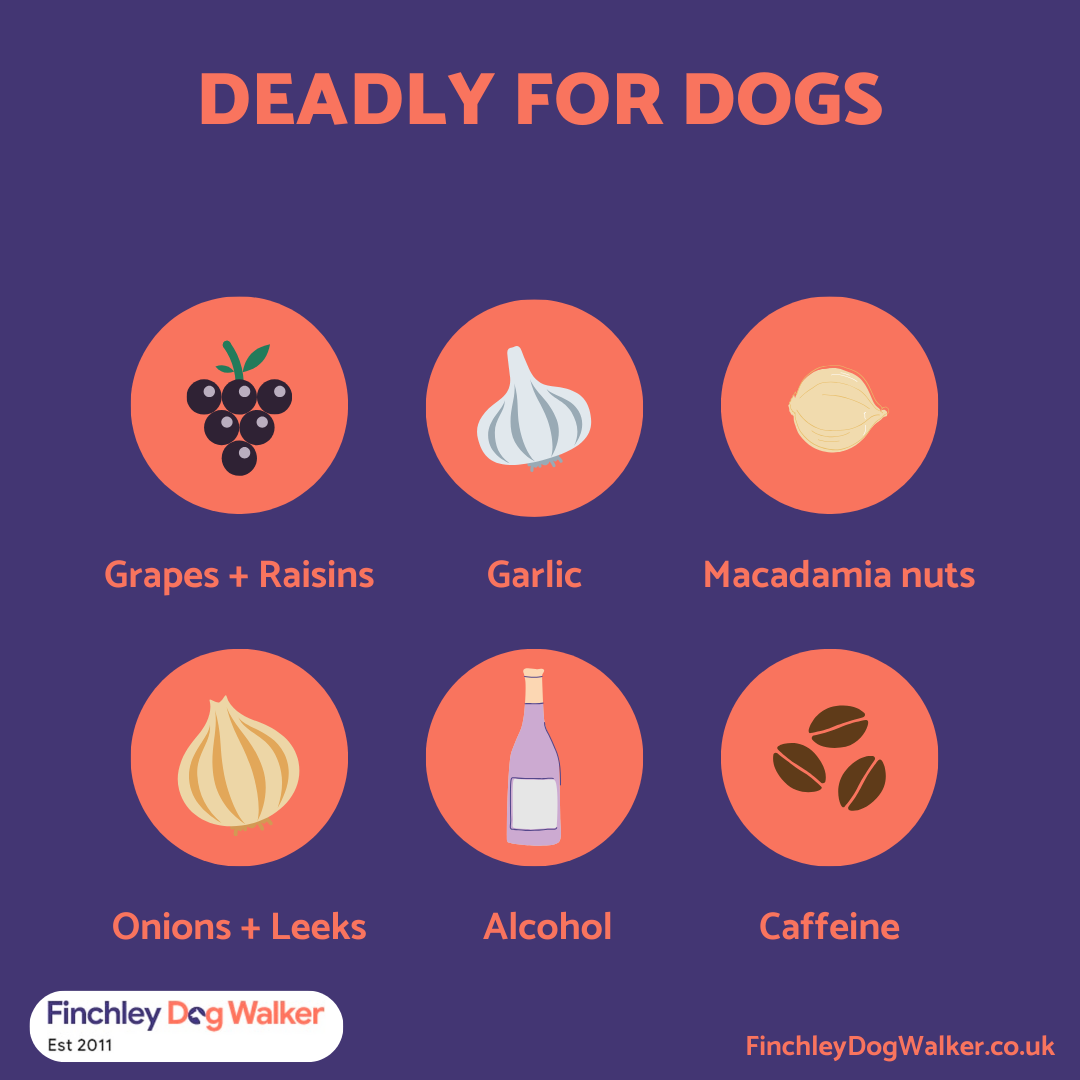
Poisoning risks and what to do
If you think your dog has eaten something toxic, do not wait to see what happens.
Call your vet.
Tell them what your dog ate, how much they may have eaten and when it happened. Keep packaging if you have it.
Do not try home remedies unless your vet tells you to. Do not make your dog sick unless your vet gives direct instructions.
Common risks include:
- Chocolate.
- Raisins and grapes.
- Onions and garlic.
- Xylitol.
- Human painkillers.
- Rat poison.
- Slug pellets
- Some plants and bulbs.
- Some essential oils.
This is one of those moments where quick veterinary advice matters.
Fireworks and noise safety
Fireworks season can be frightening for many dogs.
Dogs Trust reports that fireworks cause stress for many dogs and can increase the risk of dogs going missing during firework season.
Plan before the noise starts.
Walk earlier in daylight.
Check collars, harnesses and ID.
Keep dogs on a lead.
Close curtains.
Use background noise.
Give your dog a safe resting place.
Do not force them outside to toilet if they are terrified.
Avoid leaving worried dogs alone during peak firework times.
For very noise-sensitive dogs, speak to your vet well before fireworks season. Do not wait until Bonfire Night.
Emergency planning and first aid basics
Every dog owner should know their vet’s details and the details of the nearest out-of-hours vet.
Keep this somewhere easy to find:
Your vet’s phone number.
Out-of-hours vet number.
Insurance details.
Microchip database details.
several recent photos of your dog groomed, muddy etc
Medication information.
Emergency contact.
A small first aid kit can be useful, but it does not replace vet care.
AFFILIATE LINK: Amazon UK – recommended dog first aid kit
For walks, I also like a simple, practical kit:
Water.
Treats.
Spare poo bags
A charged phone.
A spare slip lead for emergencies.
A small towel in wet weather.
Legal responsibility and identification
In England, dogs must be microchipped, and keeper details should be kept up to date. GOV.UK confirms compulsory dog microchipping came into effect in England in 2016. (GOV.UK)
Blue Cross also explains that dogs should have correct identification, including collar and tag requirements.
GOV.UK controlling your dog in public
This is not about blame. It is about taking sensible steps to keep dogs, people and other animals safe.
Dog safety checklist
Before a walk:
- Check the weather.
- Check lead, collar, harness and ID.
- Choose a route that suits your dog.
- Take water in warm weather.
- Avoid busy places if your dog is nervous.
- Keep your phone away near roads.
- Watch your dog’s body language.
At home:
- Keep toxic foods out of reach.
- Store medication safely.
- Check gates and fences.
- Keep bins secure.
- Update microchip details.
- Know your vet and emergency vet numbers.
During seasonal risks:
Skip walks in unsafe heat.
Walk before fireworks start.
Use reflective kit in winter.
Wash paws after salted pavements.
Change plans when your dog is not coping.
Common dog safety mistakes
Walking in the heat because the dog “always has a walk”.
Using retractable leads near roads.
Letting nervous dogs get too close to triggers.
Assuming a friendly dog wants to meet every dog.
Forgetting to update microchip details.
Leaving food or medication within reach.
Waiting too long before calling a vet.
Using busy parks when a quiet street walk would be safer.
Most safety problems are easier to prevent than fix.
When a solo dog walker may be safer
Some dogs are not suited to group walks.
That does not make them bad dogs. It just means they need a different setup.
Solo walks can help dogs who are:
Nervous.
Reactive.
Newly rescued.
Older.
Recovering confidence.
Easily overwhelmed.
Not comfortable in vans or cars.
Better with calm routine.
My walks are one-to-one, on foot from your dog’s home, with no vans, no cars and no group walks.
That means I can choose quieter routes, adjust the pace and focus on your dog’s welfare.
If you are in Finchley, North Finchley, East Finchley, Finchley Central or Muswell Hill and need calm dog walking support, visit dog walking and pet care services
You can also read my Welcome Pack
Related guides
You may also find these useful:
Summer Dog Safety Hub
Dog Enrichment Guide
Sniff and Decompress Walks
Walking Kit for Nervous or Reactive Dogs
microchip
Recommends Hub
FAQs
What is the most important dog safety rule?
The most important rule is to look at the dog in front of you. Weather, traffic, health, stress, age and confidence all affect what is safe on that day.
Is it safer to walk my dog on lead?
In many areas of North London, yes. A lead is especially important near roads, wildlife, schools, busy parks and when a dog has poor recall or is nervous.
When is it too hot to walk a dog?
If the weather is hot, humid, or the pavement feels too hot for your hand, it is safer to walk very early, very late or skip the walk. Dogs can become seriously ill from heatstroke. (RSPCA)
What should I do if my dog eats something toxic?
Call your vet straight away. Tell them what your dog ate, when it happened and how much they may have eaten. Do not wait for symptoms.
Are solo walks safer for nervous dogs?
Often, yes. Solo walks allow more space, fewer surprises and calmer handling. They can be especially helpful for nervous, reactive or newly rescued dogs.
Should my dog wear a harness or collar?
Many dogs do well with a well-fitted harness and a flat collar with ID. Some nervous dogs benefit from a harness and collar connection for extra safety.
Can I walk my dog during fireworks season?
Yes, but walk earlier in daylight where possible, keep your dog on lead and check ID details. Avoid walking once fireworks have started if your dog is worried.
