A practical guide for keeping your dog safe during a UK heatwave
If you live in a flat during a heatwave, things can become difficult very quickly.
Top-floor flats hold heat.
Concrete balconies become baking trays.
Artificial grass can burn paws in seconds.
And many dogs struggle to properly cool down overnight once the building heats up.
Every summer, I see owners feeling guilty because they think their dog “needs a proper walk”.
But during extreme heat, safety matters far more than step counts.
A missed walk is usually far less dangerous than heatstroke.
This guide is based on real-world dog walking experience in Finchley and North London during hot weather. It is designed to help you safely manage dogs in flats when temperatures climb into the mid- to high-20s and beyond.
Please also check out my extreme weather guide
Updated May 2026
This page may contain affiliate links. If you buy through them, I may earn a small commission at no extra cost to you. It helps me keep this site running and continue sharing practical dog care advice.
Why are flats difficult for dogs during heatwaves
People often assume staying indoors keeps dogs safe.
Sometimes it does.
Sometimes it does not.
Flats can trap heat for hours after the outside temperature drops. I regularly speak to owners in Finchley and Muswell Hill whose dogs are still panting at midnight because the building has held onto the day’s warmth.
The biggest problems usually include:
- poor airflow
- top-floor heat build-up
- limited shaded outdoor space
- hot communal stairwells
- balconies with direct sun
- artificial grass
- limited overnight cooling
Some dogs cope better than others.
Older dogs, flat-faced breeds, overweight dogs, nervous dogs and heavily coated dogs often struggle much sooner.
But any dog can develop heatstroke.
Your dog probably does not need a midday walk
This is the hardest thing for many owners to accept.
Especially if:
- you live in a flat
- your dog is energetic
- your dog usually has long walks
- you feel guilty skipping exercise
But in extreme heat, the normal routine changes.
There is a huge difference between:
- a short shaded toilet break
and - a full exercise walk on hot pavements
During UK heatwaves, I often replace longer walks with:
- short sniff sessions
- enrichment visits
- calm indoor games
- shaded toilet breaks
- early morning walks
- later evening decompression walks
Dogs do not need forced exercise in 28°C heat.
They need help staying cool.
The biggest mistake I see during hot weather
People wait too long.
Dogs often continue walking even when they are struggling.
By the time many owners realise something is wrong, the dog is already overheating.
I pay attention to:
- heavy panting that does not settle
- frantic behaviour
- slowing down suddenly
- glazed eyes
- thick drool
- refusing treats
- searching for shade constantly
- lying down unexpectedly
Heatstroke can escalate frighteningly fast.
Check the pavement properly
This is one of the simplest safety checks you can do.
Place the back of your hand on the pavement for 7 seconds.
If you cannot comfortably hold it there, it is too hot for your dog’s paws.
This matters even more around:
- apartment blocks
- concrete courtyards
- balconies
- artificial grass
- dark tarmac
- car parks
Artificial grass is particularly dangerous during heatwaves.
I have seen some surfaces become almost untouchable in direct sun.
Guide: The dos and don’ts of artificial grass
Guide: Dogs and pavements
Guide
What I recommend instead of midday walks
Early morning walks
This is usually the safest option.
I often recommend walking before:
- commuter traffic
- direct sun
- pavement heat build-up
Places like Coldfall Woods or Highgate Wood can stay cooler than exposed pavements due to tree cover.
But even shaded woodland walks need to be shortened during extreme heat.
Later evening decompression walks
Once pavements cool properly, many dogs cope far better.
I still keep walks slower and shorter than normal.
This is not the weather for:
- ball throwing
- jogging
- bike runs
- overexcited group walks
Sniffing calmly often tires dogs more safely than physical intensity anyway.
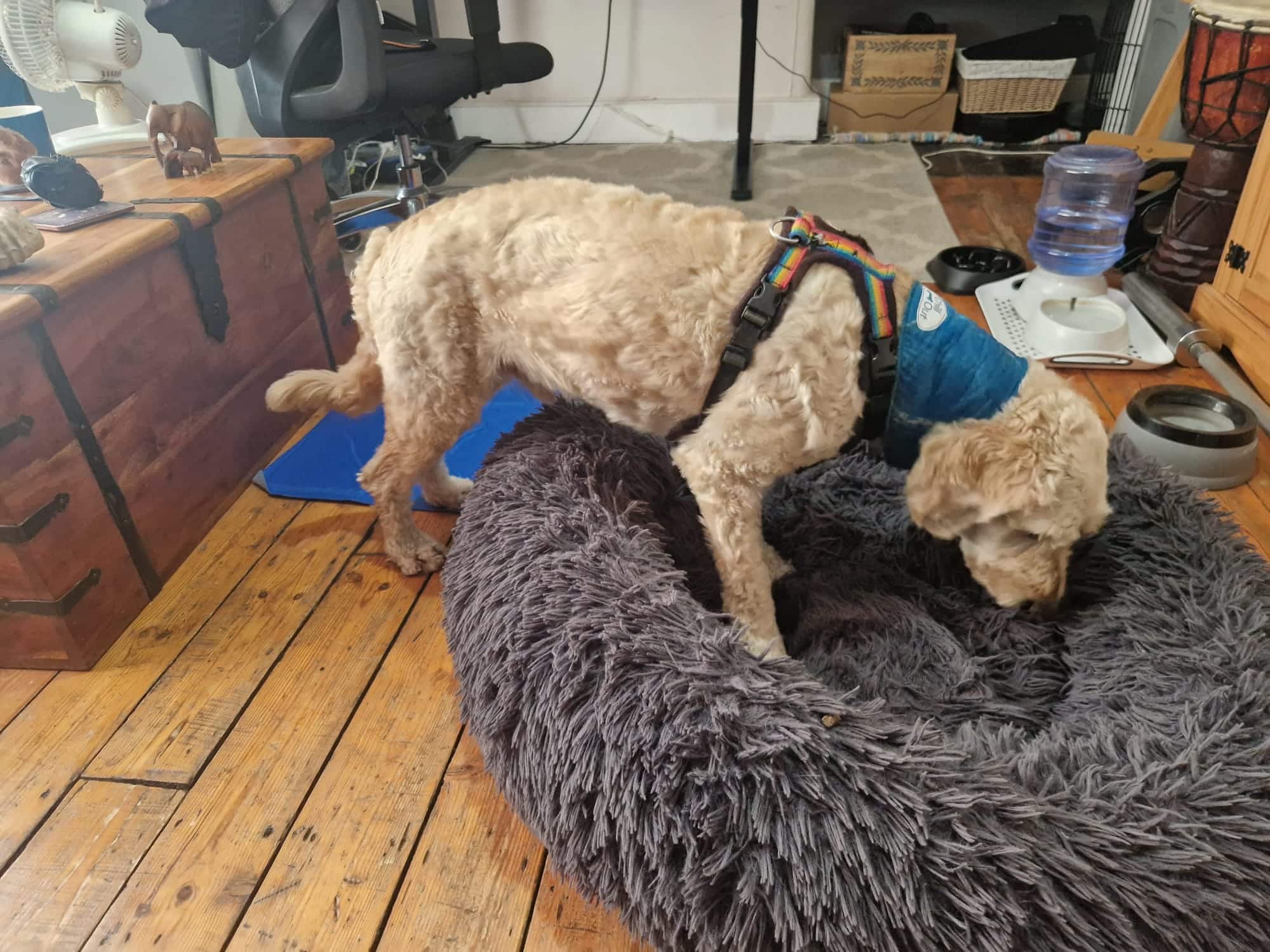
Indoor enrichment
Mental stimulation becomes incredibly useful during heatwaves.
Simple ideas include:
- scatter feeding
- snuffle mats
- cardboard box searches
- frozen lick mats
- stuffed Kongs
- basic scent games
- short training sessions
- Healthy treats to keep your dog cool
Useful products:
- enrichment toy amazon link
- lick mat – amazon link
- snuffle mat – amazon link
Guide: Creating a scent box
Many dogs settle surprisingly well once their brains have been engaged.
Keeping a flat cooler for your dog
You do not need expensive equipment.
Small changes help.
During the day
- Close curtains before the direct sun hits
- block south-facing windows
- avoid ovens where possible
- move beds away from windows
- Use fans for airflow
- Keep fresh water available in several rooms
Overnight
- Open windows safely once temperatures drop
- improve airflow through the flat
- allow dogs to choose cooler sleeping spots
- avoid thick bedding
Some dogs prefer:
- bathroom tiles
- kitchen floors
- shaded hallways
Let them choose where they feel comfortable.
Cooling products that genuinely help
Not every cooling product is useful.
Some are more marketing than practical.
Things I have found genuinely helpful include:
- cooling mats
- elevated beds
- portable fans
- cooling bandanas for some dogs
- insulated water bottles for walks
Useful placeholders:
But airflow and shade matter far more than gadgets.
Guide: My hot weather kit list
Guide summer safety for dogs
Dogs in flats and toilet breaks
This is where many owners panic.
But healthy adult dogs usually do not need constant trips outside.
During extreme heat:
- Shorter toilet breaks are safer
- shaded routes matter
- avoid standing chatting outside
- skip unnecessary exercise
I often tell owners:
“Out for the toilet. Back inside. That’s enough.”
Signs your dog may be overheating
Watch for:
- excessive panting
- drooling
- bright red gums
- wobbling
- vomiting
- confusion
- collapse
- extreme lethargy
Do not wait to “see if they improve”.
What to do if your dog overheats
Current advice is:
cool first, then transport.
Move your dog:
- into shade
- onto cool flooring
- near airflow
Use cold water, the colder the better, to cool the dog.
Then contact your vet immediately.
This advice is supported by the RSPCA
This guide is not a substitute for veterinary advice. Under the UK Veterinary Surgeons Act 1966, only veterinary professionals can diagnose medical conditions.
Flat dogs can still be happy during a heatwave
One of the biggest myths is that dogs must be physically exhausted every single day.
Most dogs cope perfectly well with:
- reduced walks
- calmer days
- extra sleep
- enrichment
- shorter toilet breaks
Remember heatwaves are generally only short and the saftey of you and your dog is more important
Common mistakes owners make during hot weather
Walking because of guilt
Unlike humans who think they must get 10,000 steps in a day, our dog does not care about Fitbit step goals.
Assuming cloudy means cool
Even on a coudy day pavements ca still retain heat espeiclly in cities
Using balconies too long
Many become dangerously hot.
Playing fetch in heat
Excitement raises body temperature quickly.
Leaving cooling too late
Act early.
utes may include:
- Cherry Tree Wood
- Parkland Walk
But all walks should still be shortened during extreme temperatures.
Useful guides that may interest you
- Dog an Cat care guides
- Summer safety
- Seasonal pet safety guide
- hot weather kit
- Walking dogs in summer
- How to tire a dog without walking
FAQ
Yes. But routines often need adjusting. Focus on cooling, enrichment and shorter toilet breaks rather than long exercise walks.
It can become extremely hot and may burn paws. Always test it first
Many dogs struggle once temperatures reach the mid-20s, especially in direct sun or on hot pavements.
Very early morning or later evening once surfaces cool properly.
Yes. Airflow helps dogs cool themselves more effectively.
Cool them immediately with cold water and airflow, then contact your vet urgently.
If you need help during hot weather, I offer calm one-to-one walks, enrichment visits, rescue dog support, house sitting and welfare visits across Finchley and surrounding parts of North London. Find out more by visiting my services page
During heatwaves, safety always comes first. That may mean shorter walks, shaded sniff sessions or indoor enrichment instead of long exercise walks.
Buy Me a Coffee
If you found this guide helpful, you can support the site via Buy Me a Coffee: