Updated Jan 2024 and March 2026
A practical guide from a Finchley dog walker
Walking a dog sounds simple. Put the lead on, head out, come back.
But after years walking dogs around Finchley, Muswell Hill and the surrounding North London woods, I can tell you it’s rarely that straightforward. A good walk can settle a dog for the rest of the day. A rushed or stressful one can leave them more wired than before.
This guide breaks down what actually matters when it comes to dog walks. Not just how often, but how to do them in a way that supports your dog’s behaviour, confidence and overall wellbeing.
This page may contain affiliate links, including Amazon links. As an Amazon Associate I earn from qualifying purchases. If you choose to buy through these links, I may earn a small commission at no extra cost to you. It helps support the site and allows me to keep sharing practical dog care advice.
What a dog walk is really for
Most people think a walk is mainly for exercise. It’s part of it, but it’s not the full picture.
For your dog, a walk is:
• a chance to sniff and process the world
• a way to release mental energy
• a routine that builds security
• an opportunity to practise calm behaviour
I often see dogs in places like Coldfall Woods who’ve clearly had a long walk, but they’re still restless. That’s usually because they’ve had constant movement, not enough thinking time.
A slower, more thoughtful walk is often more beneficial than a fast, mile-heavy one.
How often should you walk your dog?
There isn’t one rule that fits every dog.
It depends on:
• age
• breed and energy level
• health
• temperament
• past experiences
As a rough guide:
• most adult dogs benefit from 1–2 walks a day
• puppies need shorter, structured outings
• older dogs often prefer slower, shorter walks
But I pay less attention to time and more to how the dog behaves afterwards.
If your dog comes home settled, relaxed and able to rest, the walk probably met their needs.
If they’re still pacing, barking or struggling to switch off, something on the walk likely didn’t work for them.
Read my guide on how much exervise does my dog need
Why sniffing matters more than distance
This is the biggest thing owners underestimate.
Sniffing is how dogs understand the world. When you allow time for it, you’re giving your dog proper mental stimulation.
On many of my walks through Highgate Woods or along Parkland Walk, I build in quiet stretches where the dog can slow down and sniff without being rushed.
You’ll often notice:
• breathing slows
• body tension drops
• pulling reduces naturally
If your dog pulls a lot, it’s often because they feel rushed, not because they’re “naughty”.
Lead walking: what actually helps
Loose lead walking isn’t about constant correction. It’s about rhythm, clarity and consistency.
Things that help in real life:
• starting the walk calmly, not rushing out the door
• giving your dog time to settle before moving
• changing direction rather than pulling back
• rewarding calm positioning next to you
Equipment can make a difference too, especially for stronger dogs or those still learning.
A well-fitted long line is useful for giving space while staying safe in open areas:
[Amazon affiliate link – long line]
For training walks, I often use a treat pouch so I can reward quickly without fumbling:
[Amazon affiliate link – treat pouch]
But tools don’t replace patience. The biggest change usually comes from slowing the walk down.
Common mistakes I see on walks
These come up all the time, even with well-meaning owners.
Walking too fast
Dogs end up in a constant state of mild frustration. They don’t get time to process anything.
Over-socialising
Not every dog wants to meet others. Forced greetings can increase anxiety or reactivity.
Too much stimulation
Busy parks, constant ball throwing, lots of interactions. Some dogs cope, many don’t.
Inconsistent boundaries
Allowing pulling one minute, correcting it the next. This confuses the dog.
Skipping mental enrichment
Physical exercise alone rarely settles a dog long term.
What I watch for on every walk
When I’m walking a dog, I’m not just looking at where we’re going.
I’m watching the dog constantly.
Things I pay attention to:
• body language around other dogs
• ear and tail position
• how quickly they react to sounds
• whether they can disengage from distractions
• how they recover after something stressful
For example, in Cherry Tree Wood, I might step off the path if I see another dog approaching and mine looks tense.
It’s not avoidance. It’s giving the dog space to stay calm.
That’s how you build confidence over time.
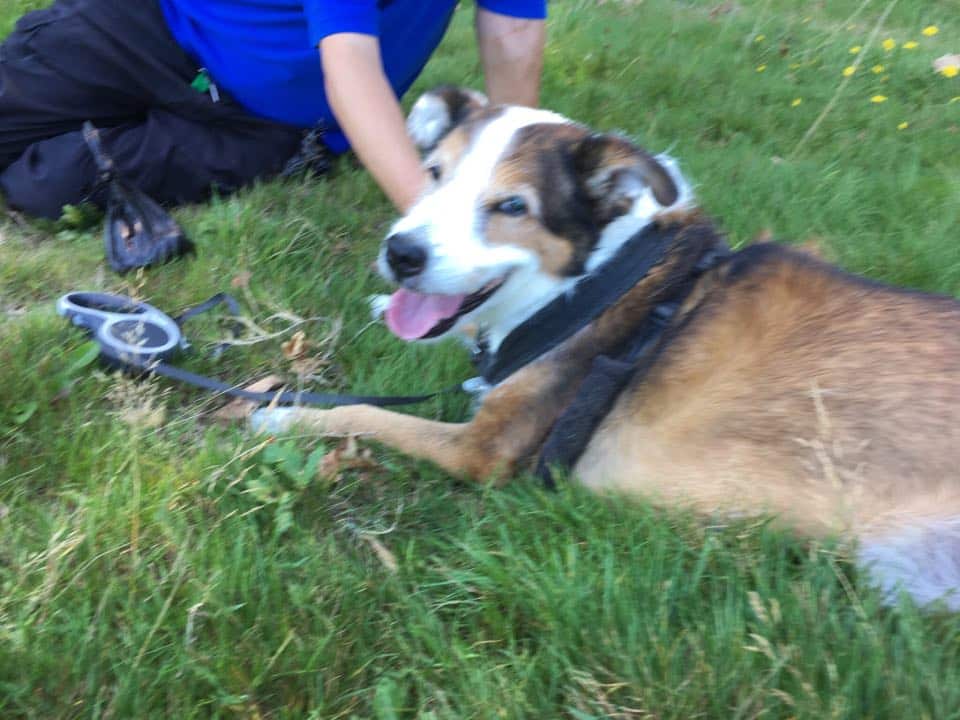
Walking reactive or sensitive dogs
This is a big part of my work.
For these dogs, the goal of a walk is not distance or social interaction. It’s emotional stability.
That means:
• quieter routes
• predictable patterns
• more distance from triggers
• shorter, calmer sessions
Parkland Walk is often a good option because it’s long and narrow, so you can manage space more easily.
I also use enrichment during walks, like scatter feeding or simple find-it games, to help dogs focus.
An enrichment toy can help at home after the walk too, especially if your dog struggles to settle:
Recommended puzzle toy (Amazon affiliate link)
Progress with reactive dogs is slow, but it’s steady when done properly.
Safety on walks in North London
Most walks are uneventful, but it’s worth being aware.
Things I stay mindful of:
• off-lead dogs approaching without recall
• cyclists on shared paths like Parkland Walk
• seasonal hazards like heat or icy ground
• discarded food or rubbish
I also always carry:
• high-value treats
• spare lead
• phone
• basic first aid awareness
If something feels off, I change direction early. That’s one of the simplest ways to avoid problems.
Weather matters more than you think
In summer, I adjust walk times to avoid midday heat. Pavements can become unsafe quickly.
In winter, I slow things down. Cold, damp conditions can affect joints, especially in older dogs.
Rain itself isn’t usually the issue. It’s how the dog feels in it.
Some dogs relax in light rain because there’s less activity around. Others find it unsettling.
I adjust based on the individual dog, not just the forecast.
Rea my article on walkig dogs in rain
Walks are part of a bigger routine
A good walk doesn’t stand alone.
It works best when it’s part of a consistent daily rhythm.
That includes:
• calm time before and after walks
• predictable feeding times
• opportunities to rest properly
• some form of enrichment at home
If a dog goes from high energy at home to a chaotic walk and back again, it’s hard for them to regulate.
But if the whole day has a steady flow, behaviour improves naturally.
When to get extra support
Sometimes walks don’t improve things on their own.
If your dog:
• reacts strongly to other dogs or people
• pulls constantly despite consistency
• struggles to settle even after walks
• seems anxious outdoors
It’s worth getting support.
That might be a trainer, a behaviourist, or a structured walking approach.
For behaviour concerns, it’s also sensible to rule out medical causes. A vet should always be your first point of contact if something seems unusual.
This follows the UK Veterinary Surgeons Act, which means behavioural or health conditions shouldn’t be diagnosed outside of a qualified professional.
Trusted guidance
For general dog care and welfare advice, I recommend:
• Dogs Trust
• RSPCA
FAQ
How long should a dog walk be?
It depends on the dog. Focus on how your dog behaves afterwards rather than sticking to a fixed time.
Is one walk a day enough?
For some dogs, yes. For others, especially younger or more active ones, two shorter walks work better.
Should I let my dog greet every dog?
No. It’s better to choose calm, appropriate interactions rather than allowing every meeting.
Why is my dog still hyper after a walk?
They may be overstimulated or not getting enough mental enrichment during the walk.
Are long lines safe?
Yes, when used properly in open spaces. They give freedom while maintaining control.
If you’re finding walks difficult, or you just want your dog to have a calmer, more structured experience, I can help.
Finchley House Sitting for Multi-Pet HouseholdsI offer one-to-one walks, support for rescue and sensitive dogs, and home care including house sitting and cat visits across Finchley and nearby areas.
No pressure. Just a steady approach that works for your dog.