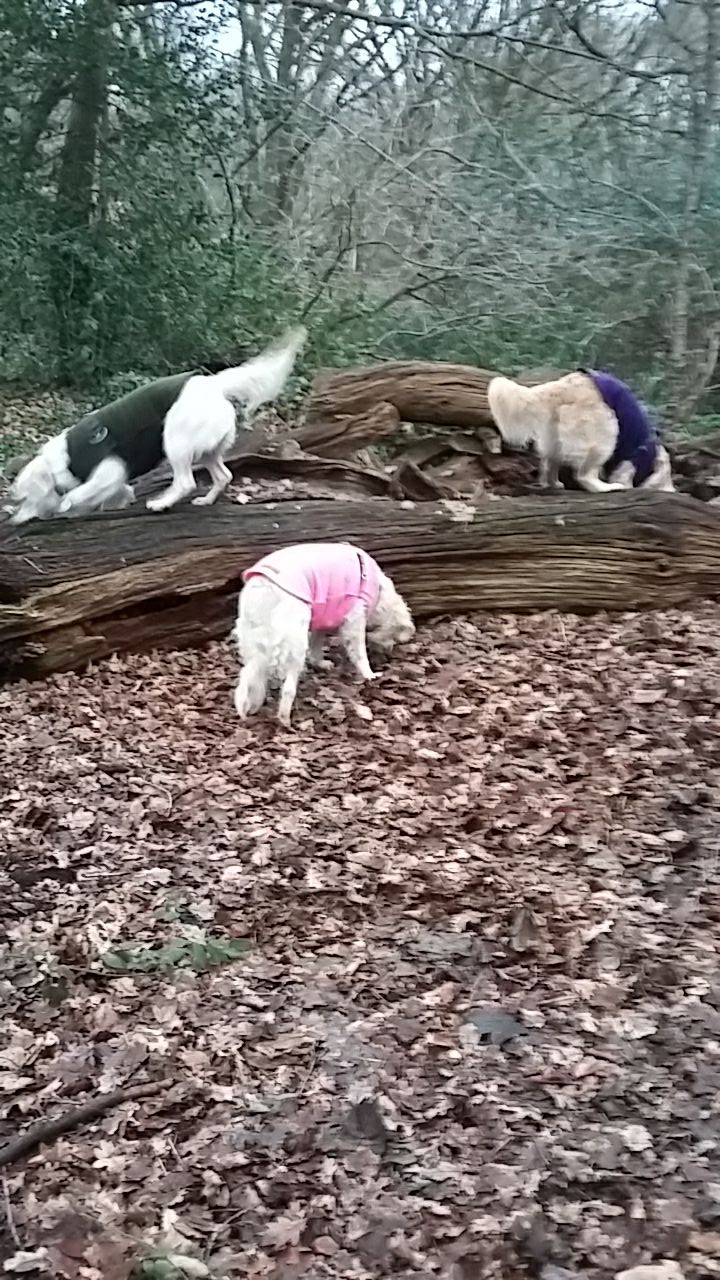
Updated August 2026
Your dog reaches a lamppost, lowers their nose and begins what appears to be a detailed investigation.
You wait.
They move two inches to the left and sniff again.
You say, “Come on.”
Your dog appears to have reached the important final paragraph and is not ready to leave.
I jokingly call this checking the wee mail.
Dogs rely heavily on scent to investigate their surroundings. When they sniff urine left by another dog, they are not necessarily wasting time, being stubborn or trying to delay the walk.
They have found information that interests them.
We should be careful about claiming that dogs can read an exact biography from every scent mark. However, urine marking is part of canine communication, and dogs clearly investigate and respond to scent left by other dogs.
This guide explains why dogs sniff wee, when to give them time and when you still need to move them on.
Why dogs sniff wee at a glance
- Scent is an important part of how dogs explore and communicate.
- Urine marks can provide social information about other dogs.
- It is reasonable to call it “wee mail”, but dogs are not reading a complete medical or personality report.
- Sniffing can provide valuable enrichment and an opportunity to investigate the environment.
- Sniffing is not automatically calming for every dog.
- You can allow appropriate sniffing while still maintaining safety and boundaries.
- Move your dog on when the location, substance or situation is unsafe or inconsiderate.
- Sudden changes in sniffing, toileting or urine marking may need veterinary advice.
Table of contents
- Why dogs sniff wee at a glance
- Why is scent so important to dogs?
- Why do dogs sniff other dogs’ wee?
- Is urine marking different from emptying the bladder?
- Is sniffing wee good for dogs?
- Sniffing is not automatically calming
- Should I let my dog sniff every lamppost?
- Teaching “go sniff” and “let’s go”
- Using sniffing as a real-life reward
- Sniffing and reactive or awkward-but-awesome dogs
- A real example from my walks
- Why choice matters
- When should I move my dog away?
- Sniffing on local Finchley walks
- How sniffing fits into my one-to-one dog walks
- Further information about scent and enrichment
- Related guides
- Frequently asked questions
- Why does my dog sniff other dogs’ urine?
- Can dogs tell which dog left the urine?
- Why does my dog sniff one place for so long?
- Should I let my dog sniff every lamppost?
- Is sniffing good enrichment?
- Does sniffing calm dogs?
- Can sniffing help a reactive dog?
- Should I use treats to encourage sniffing?
- Why does my dog urinate over another dog’s mark?
- Why has my dog suddenly started marking much more?
- Is urine marking the same as needing the toilet?
- Final thoughts
Why is scent so important to dogs?
People tend to notice what they can see.
We look at buildings, trees, people, traffic and the route ahead.
Dogs gather much more of their information through smell.
A pavement that appears unchanged to you may contain scents left by:
- Other dogs
- Foxes
- Cats
- People
- Food
- Wildlife
- Vehicles
- Plants
- Rain
- Cleaning products
- Changes in the surrounding environment
This is one reason the same local route can remain interesting to a dog.
The street may look identical to yesterday, but it does not necessarily smell identical.
Allowing dogs safe opportunities to sniff is one form of environmental enrichment. Dogs Trust explains that enrichment should allow dogs to use natural behaviours such as sniffing and searching.
Why do dogs sniff other dogs’ wee?
Urine marking forms part of canine scent communication.
Dogs may investigate:
- Where another dog urinated
- How strongly the scent remains
- Whether several dogs have marked the same location
- Whether the scent is familiar
- Whether it appears relevant enough to investigate further
- Whether they want to leave their own mark nearby
Research suggests that dogs respond differently to scent marks from different dogs and in different social situations.
However, canine scent communication is still being studied.
I would be cautious about confidently saying that your dog knows another dog’s exact age, health, breakfast, mood and life history after sniffing one lamppost.
They may gather social and biological information from scent.
We do not need to exaggerate that ability to recognise that the investigation matters to them.
Think of wee mail as a useful analogy rather than a literal translation.
Is urine marking different from emptying the bladder?
It can be.
A dog emptying their bladder may produce a larger amount of urine in one place.
A dog scent marking may leave smaller amounts in several locations.
Both male and female dogs can urine mark.
You may notice your dog:
- Sniffing before choosing a location
- Urinating a small amount
- Marking over or beside another scent
- Returning to investigate the same area
- Moving from one likely marking place to another
- Continuing the marking movement when very little urine remains
Not every small urination is a social message.
Health, age, hydration, bladder control and urinary conditions can all affect toileting.
Speak to your vet when your dog:
- Suddenly urinates much more frequently
- Strains to pass urine
- Produces only tiny amounts
- Appears uncomfortable
- Has blood in their urine
- Begins urinating indoors unexpectedly
- Drinks substantially more than normal
- Shows a sudden change in marking behaviour
Do not assume that a new toileting pattern is simply behavioural.
Is sniffing wee good for dogs?
Sniffing is a natural form of exploration.
A dog investigating an appropriate scent is:
- Using their nose
- Paying attention to the environment
- Gathering information
- Making a small choice
- Engaging in an activity they may find worthwhile
That does not mean every sniff is medically beneficial or that sniffing a particular lamppost will transform your dog’s wellbeing.
It means the activity has value to the dog.
Sniffing is not automatically calming
People often say that sniffing calms dogs.
Sometimes a dog does appear to slow down, investigate gently and become more settled during a sniff-focused walk.
But sniffing is not a canine off switch.
Watch the whole dog.
A dog who is calmly investigating may:
- Move at an unhurried pace
- Have a relatively loose body
- Pause and move on
- Remain able to respond to you
- Show no urgent need to reach the scent
- Disengage without becoming distressed
A dog who has become highly aroused by a scent may:
- Pull urgently
- Track rapidly along the ground
- Become tense
- Stop responding
- Scan the environment
- Whine or vocalise
- Become frantic about reaching the next smell
- Attempt to follow another animal’s trail
Both dogs are sniffing.
The behaviour around the sniffing is different.
Do not assume that a dog is relaxed simply because their nose is on the ground.
My Sniff and Decompression Walks for Dogs guide explains this distinction in more detail.
Should I let my dog sniff every lamppost?
Not necessarily.
A dog walk needs balance.
I do not rush dogs away from every interesting scent simply because I want to complete a particular route.
I also do not allow a dog to:
- Pull me into the road
- Enter somebody’s garden
- Urinate against shop displays
- Investigate unsafe rubbish
- Lick unknown substances
- Eat faeces
- Crowd another dog
- Wrap the lead around a person
- Spend the whole walk dragging me between scent marks
- Remain somewhere that is becoming unsafe
The dog gets appropriate opportunities to investigate.
I remain responsible for the walk.
Teaching “go sniff” and “let’s go”
You can place sniffing on a simple cue without turning the walk into a military exercise.
Introducing “go sniff”
Choose a safe area your dog already wants to investigate.
Use a cue such as:
Go sniff.
Move with your dog and allow them time to explore.
The words do not magically create the behaviour. They begin to predict that sniffing is available.
Introducing “let’s go”
Begin when your dog is interested but not completely absorbed.
Say:
Let’s go.
Move away calmly.
Reward your dog when they turn and come with you.
The reward could be:
- A small piece of suitable food
- Praise
- Moving towards another sniffing area
- Continuing the walk
- Access to another safe activity
Avoid repeating “let’s go” while remaining completely still.
Give the cue, move and reward your dog for coming with you.
My Dog Training Rewards Guide explains how to choose rewards that matter to the dog in front of you.
Using sniffing as a real-life reward
For many dogs, access to a smell can reward useful walking behaviour.
For example:
- Your dog notices an interesting grass verge.
- You pause before they pull towards it.
- You reward one or two loose-lead steps.
- You say “go sniff”.
- You move together towards the verge.
Your dog begins learning that a softer lead and connection with you can lead to the thing they wanted.
This is often more useful than trying to compete with the environment using food alone.
Read Loose-Lead Walking: A Calm, Reward-Based Guide for the complete process.
Sniffing and reactive or awkward-but-awesome dogs
I have a soft spot for dogs who are awkward but awesome.
They may be loving and comfortable at home but struggle with dogs, people, traffic or sudden events outside.
The old version of this article suggested using sniffing to distract a reactive dog.
I would now describe that more carefully.
A simple “find it” or opportunity to sniff may help some dogs disengage when:
- They are still able to eat or search
- The other dog or trigger is far enough away
- Their body remains relatively loose
- You have already created suitable distance
- The activity does not move them closer to what is worrying them
It should not be used to keep a frightened dog beside a trigger.
Do not scatter food between your dog and something they are desperately trying to escape.
Do not rely on sniffing instead of moving away.
The helpful part may be:
- Greater distance
- A quieter route
- Fewer close encounters
- Predictability
- A simple familiar activity
- Time to recover
- A combination of these
Sniffing does not treat reactivity, fear or aggression.
Dogs showing serious fear, panic, aggression or bite risk may need help from their vet and an appropriately qualified behaviour professional.
Read Responsible Dog Walking in Public for more about giving dogs and people space.
A real example from my walks
I once walked a German Shepherd who was described to me as awkward but awesome.
I loved the description because it recognised the whole dog, not only what other people saw during a difficult moment.
He could pull strongly and bark or lunge when something became too close or exciting across the road.
The answer was not simply telling him to sniff instead.
I used a broader walking plan that included:
- Quieter routes
- Greater distance
- Calm changes of direction
- Curved movement rather than direct approaches
- Rewarding check-ins
- Appropriate sniffing opportunities
- Moving away before the situation became too difficult
Sometimes he walked for a few minutes and then had an opportunity to investigate.
Sometimes I changed direction before he became fully focused on another dog.
Sometimes the best decision was simply to cross the road.
The sniffing was one part of the walk.
It was not the entire plan and it was not a cure.
Why choice matters
Dogs have relatively little control over their daily routines.
We decide:
- When they eat
- When they go outside
- Which route they walk
- How fast they move
- When the walk ends
- Who they meet
- Where they sleep
- Which activities are available
We cannot give dogs complete control.
Safety still matters.
But we can sometimes offer small, genuine choices.
On a walk, that might mean:
- Which side of the path to investigate
- Whether to sniff one safe area
- Whether to pause and look
- Which of two safe directions to take
- Whether to continue or return home
- Which suitable reward they prefer
Choice does not mean allowing the dog to do anything they want.
It means listening where there is room to listen.
My Why Dogs Need Sniff Walks, Not Step Targets guide looks at choice, pace and human fitness targets in much greater detail.
When should I move my dog away?
Move on when your dog is investigating:
- Broken glass
- Discarded food
- Medicines
- Chemicals
- Faeces
- Dead animals
- Toxic plants or fungi
- Private property
- Shop displays
- Outdoor dining areas
- Children’s equipment
- Another dog who needs space
- Anything you cannot identify safely
You may also need to move when:
- Traffic is approaching
- The pavement is narrow
- A cyclist or runner needs to pass
- Your dog is becoming increasingly tense
- The lead has become tangled
- You need to leave the area
- The location is not appropriate for marking
Use a calm cue, move away and reward your dog for coming with you.
There is no need to jerk the lead or frighten them.
Sniffing on local Finchley walks
A dog does not need a huge woodland adventure to find interesting scents.
Local streets provide constantly changing information.
Depending on the individual dog, I may walk through:
- Quiet residential roads
- Cherry Tree Wood
- Coldfall Wood
- Wider local paths
- Small green spaces
- Familiar routes close to home
I choose the route around the dog.
A confident dog may enjoy investigating somewhere new.
A newly adopted dog may prefer the same short local circuit.
A senior dog may cover less distance but spend longer exploring several familiar patches of grass.
The quality of the walk is not measured only by miles or speed.
How sniffing fits into my one-to-one dog walks
I have walked dogs professionally since 2011.
I provide one-to-one walks from the dog’s own front door.
There are:
- No group walks
- No vans
- No collection rounds
- No pressure to keep pace with several other dogs
That gives me room to adjust the walk.
If a dog needs a little longer to investigate, we can stop.
If they become overwhelmed, I can change direction.
If they are older or less mobile, I can reduce the distance.
If they need space from another dog, I do not have a group attached to me.
Read about my Solo Dog Walks in Finchley.
For walks that include structured practice of agreed everyday skills, visit One-to-One Training-Support Walks.
Does your dog need a walk built around them?
Some dogs want to cover ground.
Others need to sniff, pause, watch or take a quieter route.
I provide calm one-to-one walks for rescue, nervous, reactive, senior, spirited and occasionally awkward-but-awesome dogs in Finchley and nearby areas.
Contact Del about one-to-one dog walking.
Further information about scent and enrichment
For broader guidance, read:
- Dogs Trust: Enrichment Activities for Dogs
- Blue Cross: Enrichment for Dogs
- Blue Cross: Keeping Walks on a Lead Fun
Recent research also continues to examine how domestic dogs respond to urine marks and how those marks may form part of communication.
The research is interesting, but it is still developing. That is why I avoid pretending we can translate every individual sniff into an exact sentence.
Related guides
- Dog Training Hub
- Why Dogs Need Sniff Walks, Not Step Targets
- Sniff and Decompression Walks for Dogs
- Dog Enrichment Ideas That Actually Help Calm and Tire Your Dog
- Loose-Lead Walking: A Calm, Reward-Based Guide
- Dog Training Rewards Guide
- Responsible Dog Walking in Public
- Reactive and Nervous Dog Walking in Finchley
- Solo Dog Walking in Finchley
Frequently asked questions
Why does my dog sniff other dogs’ urine?
Urine marks form part of canine scent communication.
Your dog is investigating information left in the environment. Research into exactly what dogs understand from each mark is still developing.
Can dogs tell which dog left the urine?
Dogs can discriminate between different scents, and scent may contain information about the animal that produced it.
However, we should avoid claiming that owners can know precisely what the dog has learned from every sniff.
Why does my dog sniff one place for so long?
The location may contain a particularly interesting or complicated mixture of scents.
Another dog or animal may also have visited recently.
You do not need to know exactly what your dog has detected to recognise that they are interested.
Should I let my dog sniff every lamppost?
No.
Give your dog appropriate opportunities to sniff while maintaining safety, respecting private property and moving them away from unsafe substances or unsuitable locations.
Is sniffing good enrichment?
Yes.
Sniffing allows dogs to investigate their environment and use a natural behaviour.
It should be part of an appropriate balance of exercise, exploration, training, rest and other activities suited to the individual dog.
Does sniffing calm dogs?
It may form part of a slower and more settled walk for some dogs.
It is not automatically calming. Some dogs become more excited or vigilant when following scent.
Watch the whole dog rather than one behaviour.
Can sniffing help a reactive dog?
An opportunity to sniff or search may help some dogs disengage when they remain under threshold and have sufficient distance.
Sniffing does not treat reactivity, fear or aggression.
Should I use treats to encourage sniffing?
You can use a simple “find it” game or scatter a small amount of suitable food in a safe, clean area.
Do not scatter food near dangerous rubbish, where dogs may compete or where your dog has food-guarding concerns.
Account for food used within your dog’s daily intake.
Why does my dog urinate over another dog’s mark?
This may be a form of overmarking or scent communication.
Both male and female dogs can mark.
Why has my dog suddenly started marking much more?
Changes in routine, surroundings and social scents may affect marking.
Sudden or substantial changes can also have medical causes. Speak to your vet if your dog urinates frequently, strains, appears uncomfortable, or shows any other unexpected change.
Is urine marking the same as needing the toilet?
Not always.
A dog may empty their bladder in one place or leave smaller amounts at several scent-marking locations.
Health and bladder control can also affect the pattern.
Final thoughts
Your dog is not necessarily wasting time when they stop to inspect a lamppost.
They have found something worth investigating.
I am happy to call it checking the wee mail, provided we remember that it is an analogy rather than a complete translation service.
Give your dog time where it is safe and appropriate.
Move them on when you need to.
Watch the whole dog.
And remember that a walk does not have to be a constant march from the front door to the park and back again.
Sometimes the most interesting part of your dog’s walk is the small patch of grass you almost hurried past.
For more about slower walks, visit Why Dogs Need Sniff Walks, Not Step Targets.
For practical reward-based guidance, explore the Dog Training Hub.
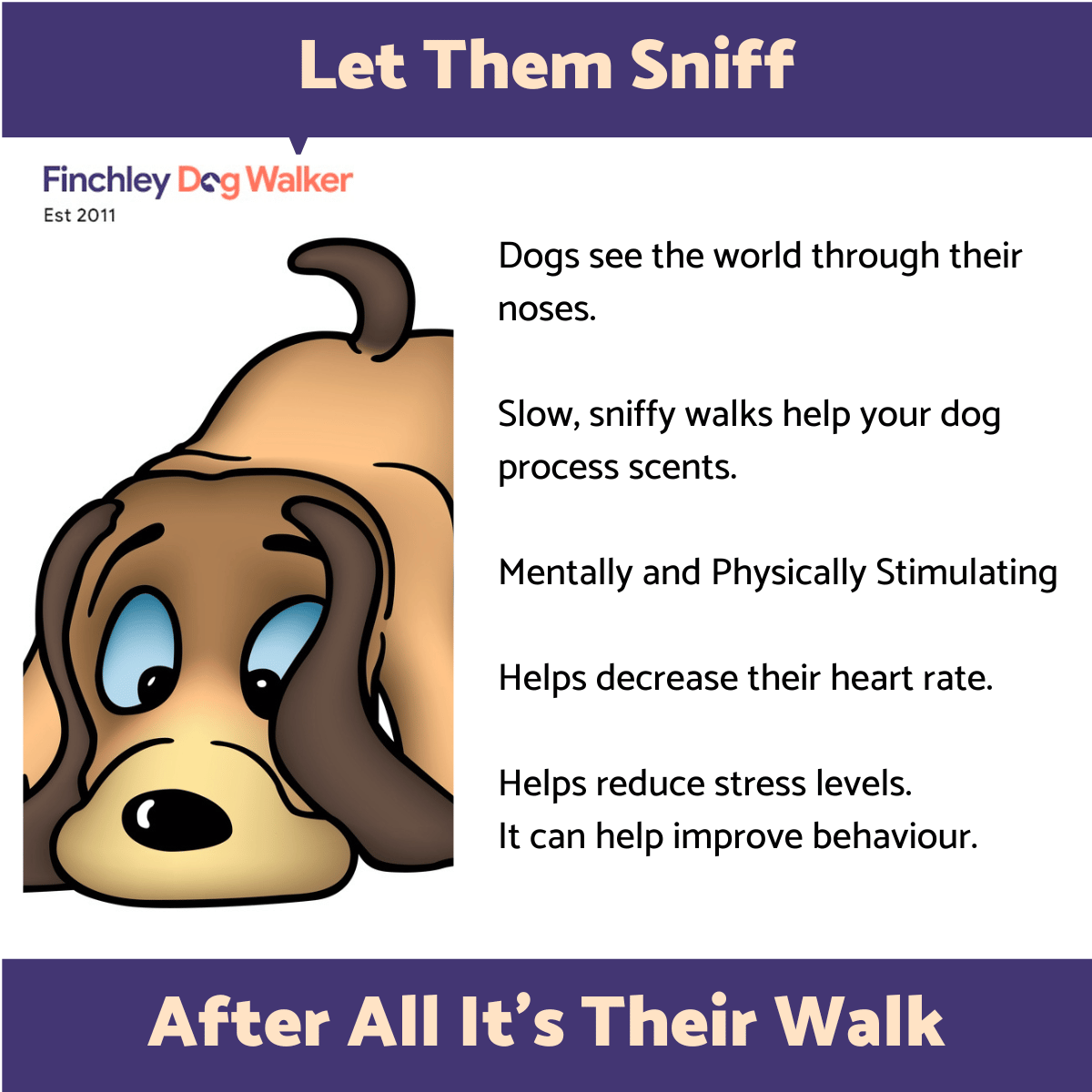
General information disclaimer: This article provides general information about dog walking, scent investigation and urine marking. It does not replace veterinary or individual behaviour advice. Contact your vet if your dog’s urination, drinking, toileting or normal behaviour changes unexpectedly.
Other articles you may be interested in