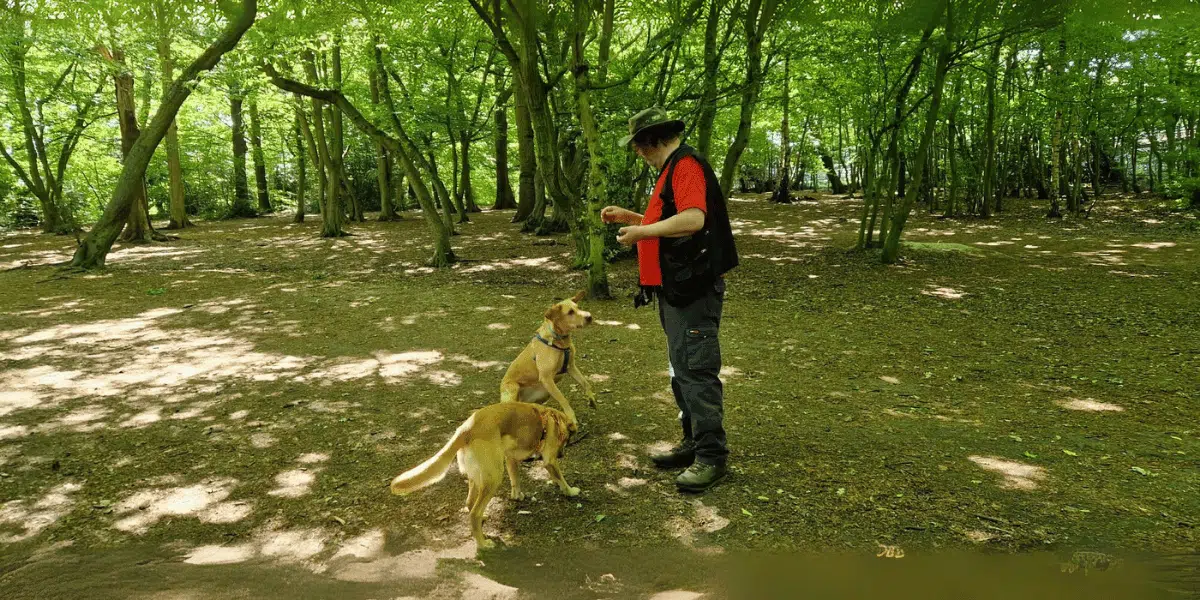
There is often confusion about whether children can legally walk dogs in the UK.
Some people believe there is a minimum age requirement, while others assume that if a child is capable of holding a lead, they are also responsible for the dog. In reality, neither is entirely correct.
Whether you’re a parent, a dog owner, or looking for a professional dog walker, understanding the law is important. It also helps you make informed decisions that protect both dogs and people.
This guide explains:
- Is there a minimum age to walk a dog?
- Who is legally responsible?
- What happens if something goes wrong?
- Should children walk dogs alone?
- What should you look for when choosing a professional dog walker?
Is there a minimum age to walk a dog in the UK?
The simple answer is no.
There is currently no UK legislation that sets a minimum age for walking a dog.
That means a child can legally hold a dog’s lead.
However, this is where many people misunderstand the law.
Just because a child can walk a dog does not mean they become legally responsible for that dog.
Who is legally responsible for a dog?
The Animal Welfare Act 2006 explains who is responsible for an animal.
Section 3 states that responsibility applies to anyone who owns a dog or is temporarily in charge of one.
Importantly, it also states that where a person under 16 years old is responsible for an animal, responsibility is treated as belonging to the adult with actual care and control of that child.
In practice, this usually means:
- A parent
- A guardian
- The head of the household
remain legally responsible.
This responsibility cannot simply be transferred because a child is holding the lead.
Read the legislation
https://www.legislation.gov.uk/ukpga/2006/45/section/3
What does the Dangerous Dogs Act say?
The Dangerous Dogs Act 1991 takes a similar approach.
Where a dog belongs to someone under the age of 16, references to the owner include the head of the household or the person with parental responsibility.
If a dog is dangerously out of control, causes injury or damages property, it is generally the responsible adult—not the child—who may face legal consequences.
These consequences could include:
- Criminal prosecution
- Civil claims
- Compensation
- Fines
- Court orders
- In the most serious cases, destruction of the dog
Read the legislation:
https://www.legislation.gov.uk/ukpga/1991/65/section/6
Scotland has additional legislation
In Scotland, the Control of Dogs (Scotland) Act 2010 states that where the owner is under 16, Dog Control Notices are served on the person with parental responsibilities.
This reflects the principle that legal responsibility remains with the responsible adult.
Read the legislation:
https://www.legislation.gov.uk/asp/2010/9/notes/division/4
Does this mean children should never walk dogs?
Not necessarily.
Many children grow up around dogs and develop excellent handling skills.
Walking together as a family can be a valuable learning experience.
However, walking a dog independently is different.
Parents should consider whether their child can safely manage situations such as:
- An off-lead dog running over.
- A dog becoming frightened.
- Traffic.
- Cyclists.
- Wildlife.
- An injured dog.
- A dog slipping its collar or harness.
- Conflict between dogs.
Even experienced adult dog handlers occasionally encounter situations that require quick judgement and calm decision-making.
Experience matters more than age
One of the biggest misconceptions is that walking a dog simply involves holding a lead.
Professional dog walking is about much more than that.
A competent dog handler should be able to:
- Recognise stress signals before behaviour escalates.
- Read canine body language.
- Prevent conflict where possible.
- Keep dogs at appropriate distances.
- Handle emergencies calmly.
- Understand canine welfare.
- Follow relevant animal welfare legislation.
This is why experience is often just as important as physical strength.
Related reading
How to Choose a Professional Dog Walker
Understanding Dog Body Language
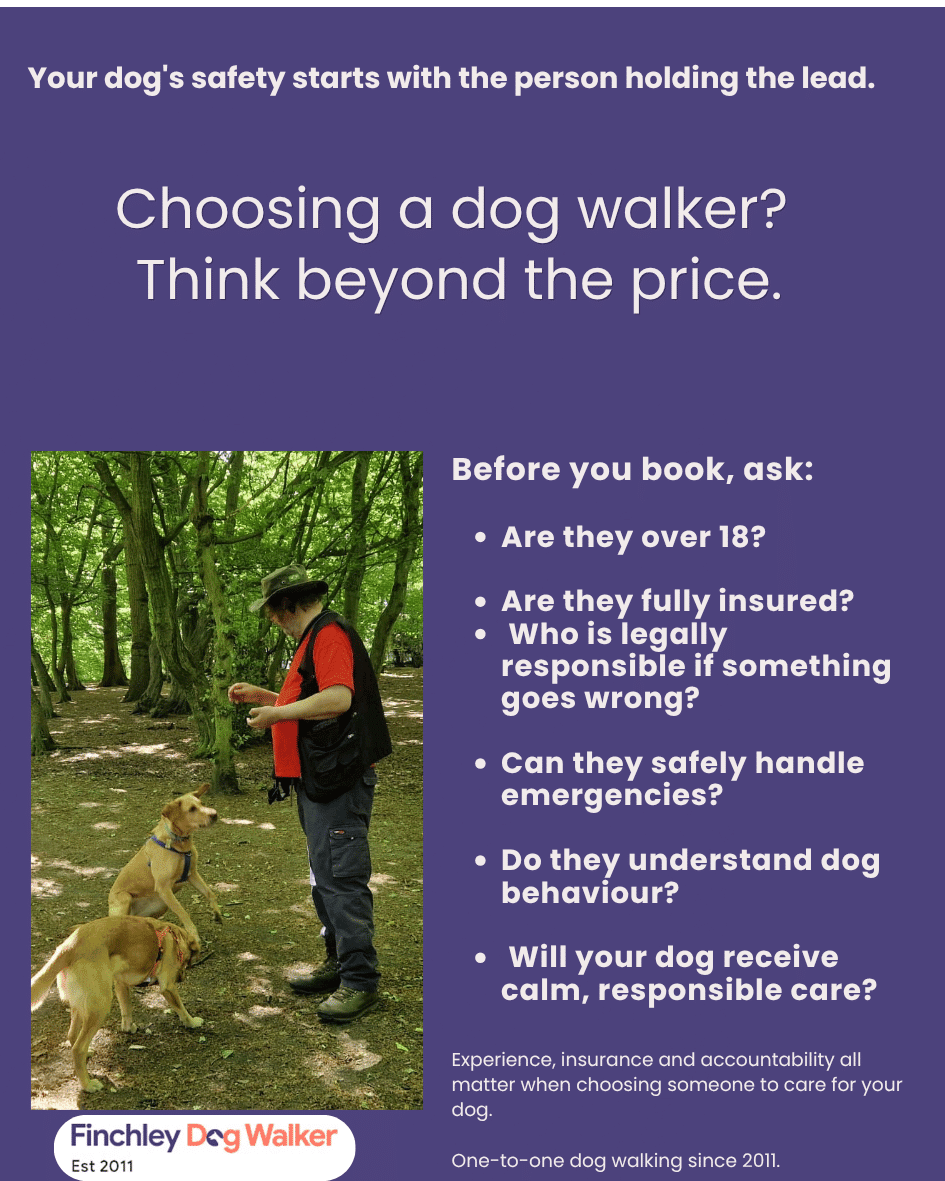
What should you ask before hiring a dog walker?
If you’re trusting someone with your dog, don’t be afraid to ask questions.
A professional dog walker should be happy to explain:
- Are they over 18?
- Are they fully insured?
- What experience do they have?
- How many dogs do they walk together?
- What happens in an emergency?
- Do they carry canine first aid equipment?
- How do they introduce unfamiliar dogs?
- What qualifications or memberships do they hold?
The cheapest option is not always the safest option.
Related reading
Questions to Ask Before Hiring a Dog Walker
Why Dog Walker Insurance Matters (coming soon)
Can someone under 18 run a dog walking business?
Some young people are knowledgeable, responsible and passionate about dogs.
However, if someone under 18 offers dog-walking services, it is sensible to ask additional questions.
For example:
- Is their insurance valid?
- Does their vehicle insurance cover business use?
- Who is legally responsible during the walk?
- Who signs the contracts?
- What happens if a dog is injured?
- What happens if the dog escapes?
- Are parents involved in the business?
These questions are not about age discrimination.
They are about understanding responsibility, insurance and risk.
What about babies or children accompanying dog walks?
Some professional dog walkers choose to take babies or young children on walks, especially in the summer holidays
Before booking, ask whether:
- Their business insurance allows this.
- Vehicle insurance covers transporting client dogs alongside children.
- Risk assessments have been completed.
- Emergency procedures are in place.
Insurance providers vary, so assumptions should never be made.
Always ask for clarification if you are unsure.
The bottom line
There is no minimum legal age for walking a dog in the UK.
However, legal responsibility for dogs handled by children under 16 remains with the responsible adult.
Whether you are allowing your own child to walk the family dog or choosing a professional dog walker, it is worth considering more than age alone.
Experience, judgement, insurance, legal responsibility and an understanding of dog behaviour all contribute to safe and responsible dog handling.
Choosing the right person to care for your dog is about more than simply finding someone available. It is about confidence that your dog is in capable hands.
Frequently Asked Questions
Can a 12-year-old walk a dog?
Yes. There is no legal minimum age. However, the parent or guardian remains legally responsible for the dog’s welfare and behaviour.
Can a 14-year-old become a dog walker?
They may offer dog walking, but owners should carefully consider insurance, legal responsibility and experience before using their services.
Who is responsible if a child loses a dog?
Responsibility is likely to rest with the dog’s owner or the adult legally responsible for the child, depending on the circumstances.
Can children accompany professional dog walkers?
Some businesses allow this, while others do not. Insurance policies differ, so owners should ask what cover is in place.
Further Reading
- How to Choose a Professional Dog Walker
- Questions to Ask Before Hiring a Dog Walker
- Understanding Dog Body Language
- Why Dog Walker Insurance Matters
- Off-Lead Dogs: What the Law Says
- Dog Walking Safety Tips
- Why Meet and Greets Matter
External resources
- Animal Welfare Act 2006
https://www.legislation.gov.uk/ukpga/2006/45/contents - Dangerous Dogs Act 1991
https://www.legislation.gov.uk/ukpga/1991/65/contents - Control of Dogs (Scotland) Act 2010
https://www.legislation.gov.uk/asp/2010/9/contents - GOV.UK – Controlling your dog in public
https://www.gov.uk/control-dog-public - Blue Cross – Dog laws in the UK
https://www.bluecross.org.uk/advice/dog/wellbeing-and-care/dog-laws-uk
Related posts you may be interested in