Table of contents
- Why vets warn about the dangers of throwing sticks for dogs
- The injuries I see most often from sticks
- Safe fetch toys for dogs
- Plastic throwing stick for dogs: when it helps and when it does not
- Tennis ball dangers for dogs and what I use instead
- Safer games on dog walks that are not fetch
- How do I stop my dog from picking up sticks on walks
- What to do if your dog has a dog mouth injury from sticks
- FAQ
- Conclusion
I get it. You pick up a stick, your dog lights up, and you’ve got an easy game on a walk.
For years, stick throwing has been sold to us as harmless, natural fun.
But the truth is simple. The dangers of throwing sticks for dogs are real, and the injuries can be severe. Vets in the UK have been warning about this for a long time, because they keep treating the same preventable wounds. (royalkennelclub.com)
This post is not here to scare you. It’s here to help you make small swaps that protect your dog’s mouth, throat, and neck, without taking the joy out of your walks.
Most dogs do not chase sticks because they “need a stick”. They chase because you’ve turned it into a game. It’s movement, anticipation, and a shared routine.
Maybe you’ve had a near miss already. A yelp when they landed awkwardly. A splinter stuck in a gum. A stick that snapped and left sharp points.
Or maybe your dog is the type who picks up sticks all by themselves, even when you never throw them.
Either way, you’ve got options.
In a moment, I’ll share safe fetch toys for dogs, safer games on dog walks that still give your dog that thrill, and a step-by-step plan for how to stop my dog picking up sticks on walks without nagging, grabbing, or turning every walk into a battle.
If you’re in Finchley or nearby and you want calm, one-to-one support with play skills, recall, or safer outdoor routines, that’s the sort of work I do on my solo dog walks and training-style working walks. You can take a look at my services here: Services
Why vets warn about the dangers of throwing sticks for dogs
Most people picture a dog trotting back with a stick held neatly like a baton.
That is not what often happens.
Dogs run fast. They pounce. They grab at awkward angles. They hit the ground with force. A thrown stick can land upright. A dog can spear itself as it grabs it at speed. (The Guardian)
There’s also the chewing side.
Even if you never throw sticks, dogs chew them. Wood splinters. Splinters in a dog’s mouth from sticks can lodge under the tongue, in the gums, or further back, where you cannot see. Infection risk goes up fast because mouths are full of bacteria, and sticks are not clean.=
This is why UK charities and vet bodies keep repeating the message. Don’t throw sticks. Use safer alternatives. (royalkennelclub.com)
The injuries I see most often from sticks
When people search for injuries in dogs, they usually want to know what counts as “serious”.
Here are the big ones.
Dog mouth injury from sticks
Cuts to the gums, tongue, palate, and lips may look small but can hurt a lot. Some bleed heavily. Some barely bleed and still cause pain.
Splinters in the dog’s mouth from sticks
This is the sneaky one. Your dog may keep trying to swallow, paw at their mouth, or refuse food. The splinter can be hidden.
Throat injuries and impalement
This is the nightmare scenario: a dog runs onto a stick or grabs it at speed. UK vets have spoken publicly about life-threatening cases. (The Guardian)
Eye injuries
A stick carried at face height is not just a risk to your dog. It’s a risk to other dogs, too.
Dog choking hazard: stick fragments
A snapped bit of wood can be swallowed. It can get stuck. It can scratch the throat on the way down.
If you take one thing from this section, let it be this.
A “quick game of fetch” is not worth the risk of a preventable emergency vet trip.
Safe fetch toys for dogs
If your dog loves chasing, you do not need to stop playing.
You just need safe toys for retrieving that are designed not to splinter, not to snap into sharp points, and not to wedge in the throat.
When you choose a fetch toy, I look for:
- One solid piece, not something that breaks apart easily
- The right size, so it cannot fully slip into the mouth
- Materials made for dogs, not garden tools, not children’s toys
- A shape that encourages a side-on carry rather than straight down the throat
- A surface that is easy to clean
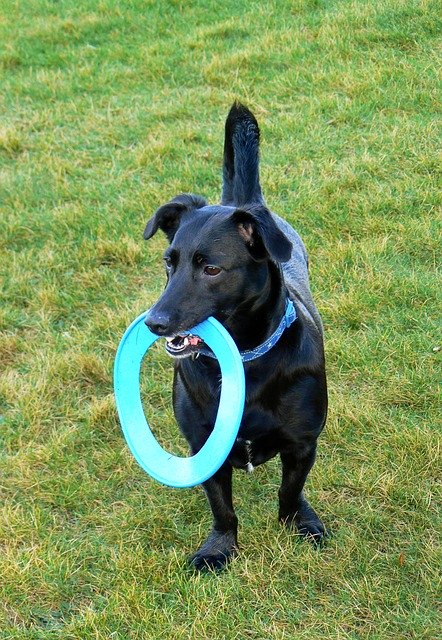
Frisbees and flying discs
A disc can work well for dogs who like to chase and catch, especially in open spaces.
Pick a disc designed for dogs rather than a hard plastic picnic Frisbee. Softer edges reduce the risk of a mouth knock and tend to be easier to carry.
If your dog tends to leap and twist wildly, keep catches low and rolling throws can be safer than high aerial ones. It still feels exciting, but you avoid big mid-air landings.
Balls, but not tiny ones
Balls are popular because they are easy to carry and easy to throw.
But ball choice matters. A ball that is too small can become lodged, which is why size is not a detail. It is the safety feature.
You can also rotate toys. A lot of obsessive fetching is not “fitness”. It’s habit and adrenaline. Swapping between two toys and adding sniff breaks can keep your dog calmer.
If your dog is ball-mad, read this as well, because tennis ball dangers for dogs are widely misunderstood:
Plastic throwing stick for dogs: when it helps and when it does not
People often ask me about plastic throwing sticks for dogs. The idea is obvious. Same shape, less splinter risk.
The good news is that plastic does not splinter like wood.
The bad news is that some are heavy, rigid, and still carry risk.
A heavy toy can still cause impact injuries if your dog misjudges the catch. If it is small enough to be jammed into the mouth, it can still become a choking hazard. And if your dog is a powerful chewer, chunks of plastic can become a problem in their own right.
If you use one, use it like this:
- Choose the biggest size that your dog can carry comfortably
- Avoid long-distance throws in crowded areas
- Don’t encourage high-speed leaps at face height
- Stop the game if your dog starts chewing it into rough edges
- Treat it as an outdoor retrieve toy, not a chew toy
If you want the stick shape, I prefer softer rubber options over very rigid plastic, for most dogs. The Royal Kennel Club also encourages owners to use safer rubber alternatives rather than wooden sticks.
Tennis ball dangers for dogs and what I use instead
Tennis balls are everywhere. They end up in coat pockets by default.
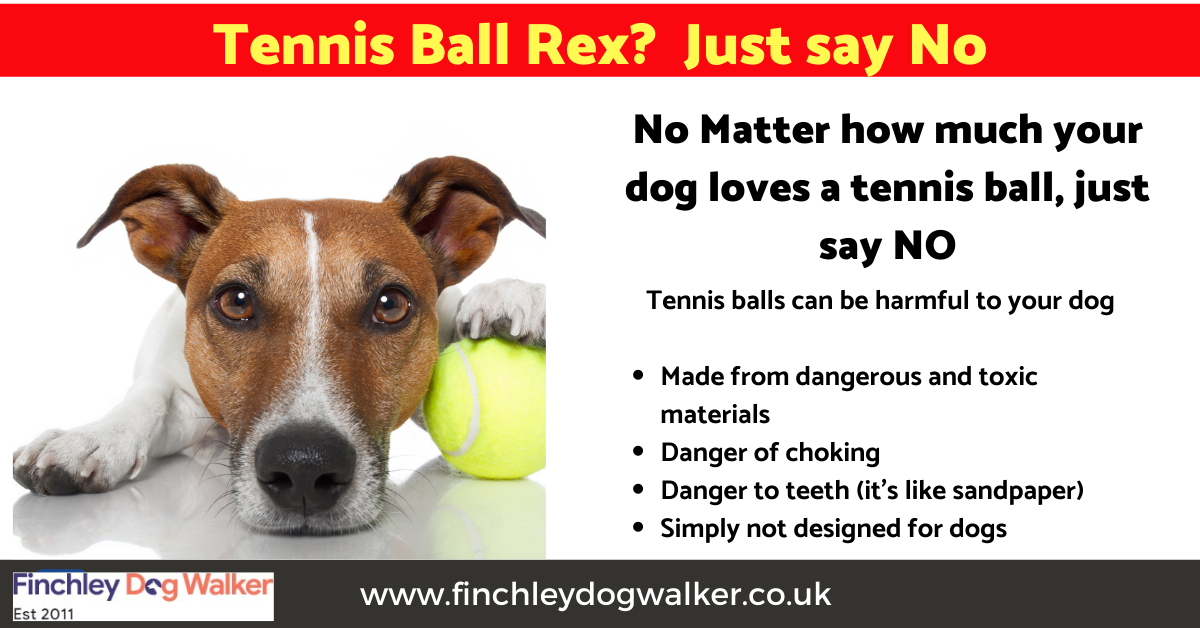
But the dangers of tennis balls for dogs come up for a reason.
Some dogs chew them hard. The felt can be abrasive on teeth, and the ball can split or get stuck if it is the wrong size.
If your dog just chases and returns, you can reduce risk by switching to dog-specific rubber balls in the right size.
If your dog likes to chew, do not hand them a tennis ball as a chew item. Give them a chew toy and supervise.
This is one of those “small change, big difference” swaps.
Safer games on dog walks that are not fetch
Fetch is only one way to meet your dog’s needs.
A lot of dogs do better when we mix movement with thinking and sniffing. That’s where dog enrichment alternatives to fetch come in, like brain games and scent work.
Here are safer games on dog walks that I use all the time.
1) Find it
Step-by-step:
- Put your dog on a lead if they struggle to settle.
- Drop a few small treats into the grass.
- Say “find it” once.
- Let your dog sniff and search.
- Repeat, then move on.
This gives your dog a job. Sniffing also helps many dogs decompress.
2) Treat trial
This is a gentle version of the “trail of treats” idea.
- Walk a short loop while your dog waits with a friend or on a short lead hold.
- Drop treats every few steps.
- Bring your dog back and follow the trail slowly.
If your dog gets over-excited, make the trail easier. Calm is the aim.
3) The two-tree recall game
- Stand near a tree or lamppost.
- Call your dog in a happy tone.
- Reward when they arrive.
- Jog a few steps to another marker and repeat.
This builds a recall habit without needing to throw anything.
4) Pattern games for busy spots
If your dog gets overwhelmed near roads, cyclists, or other dogs, a simple “one two three” treat rhythm can help.
You’re not bribing. You’re building predictability.
If you want more ideas, this older post still gives a useful starting point, and I’d pair it with the scent games above:
Things to do on a walk
How do I stop my dog from picking up sticks on walks
This is a common one, especially in parks and woodland areas.
The goal is not to “win” by yanking sticks away.
The goal is to teach a replacement habit.
Step 1: Stop rehearsing the problem where you can
If your dog is obsessed with sticks, choose routes with fewer sticks for a couple of weeks. I know that’s not always possible, but even reducing exposure helps.
Step 2: Teach a strong “trade”
At home first.
- Offer a low-value toy.
- Present a high-value treat at your dog’s nose.
- When they drop the toy, say “thank you” or “trade”.
- Give the treat.
- Hand the toy back.
Giving the toy back matters. It teaches your dog that dropping does not mean losing.
Step 3: Build “leave” without pressure
Again, start easy.
- Put a boring item on the floor.
- When your dog looks away from it, mark that moment with “yes”.
- Reward.
You are rewarding the choice to disengage.
Step 4: Use a carry toy
Some dogs just like holding something.
Bring a safe carry item. A big rubber ball, a fabric tug, or a dog-safe retrieval toy.
If your dog picks it up early in the walk, they are less likely to grab a stick.
Step 5: Make sticks boring and you interesting
Because the stick is not the real reward.
The reward is the game that happens with you.
If your dog grabs a stick, stay calm. Use your trade. Move away and restart a different game.
If you feel stuck with this, one-to-one support makes a big difference. I do calm, structured work with dogs who need better outdoor focus, and I specialise in rescue dogs who find the world a lot. Details are on my services page:
What to do if your dog has a dog mouth injury from sticks
If your dog has a stick wedged in the mouth or throat, or you suspect a penetrating injury, do not try to pull it out. Seek urgent veterinary help.
Even smaller injuries matter.
Watch for:
- Pawing at the mouth
- Drooling more than usual
- Blood on saliva
- Repeated swallowing
- Refusing food
- Sudden bad breath
- Yelping when picking things up
If you can see a tiny splinter at the very front of the mouth, your vet may advise removal. If it is further back, leave it alone and get help. Hidden fragments can cause infection.
This is also a good moment to review your dog’s toy basket. Dog choking-hazard toys are not just sticks. Any toy that is the wrong size, breaks apart, or is used unsupervised can become a problem.
Quick disclaimer: this is general guidance, not a diagnosis. If you’re worried, call your vet.
FAQ
Are sticks safe for dogs to chew if I do not throw them?
Chewing is still risky. Wood can splinter, and splinters in a dog’s mouth from sticks can lodge where you cannot see. Infections can follow. UK charities advise choosing safer chew alternatives instead. (Blue Cross)
What is the safest alternative to stick throwing for dog walks?
A dog-safe retrieval toy in the right size is a good start, but I also like scent games. A quick “find it” scatter gives your dog a job and helps them settle, with no flying objects involved.
Are rubber sticks safe?
They tend to be safer than wood because they do not splinter, and the Royal Kennel Club recommends safer rubber alternatives. You still need the right size and supervision. (royalkennelclub.com)
My dog is obsessed with sticks. Will stopping make them frustrated?
Sometimes, for a short while. That’s why I swap the routine rather than just removing it. Keep the chase element with a safer toy, then add brain games and sniff time. Most dogs adjust quickly when the new game is consistent.
Should I take sticks away from my dog when they pick them up?
If you chase your dog, you can turn it into a keep-away game. I prefer teaching a trade and rewarding the drop, then offering a safer carry item. That protects your relationship and reduces conflict.
Conclusion
The dangers of throwing sticks for dogs are not rare, freak accidents. They’re common enough that UK vets and charities keep warning owners to stop, because the injuries can be life-changing and preventable.
If your dog loves the chase, you do not need to lose that joy.
Swap sticks for safe fetch toys for dogs that are the right size and made for retrieving. Be cautious with rigid toys, and think about whether a toy could become one of those dog choking hazard toys if it’s used in the wrong way.
Then widen the menu.
Use sniff games, treat trails, and simple recall play to give your dog movement and thinking time, not just adrenaline.
If you’re trying to work out how to stop my dog picking up sticks on walks, start with a calm trade, stop the tug-of-war, and reward the choices you want to see again.
And if you’d like a hand, I can help you build safer outdoor routines through solo dog walks, one-to-one support, and structured walks for rescue dogs who need confidence and calm. You can read how I work here:
Services
Below are some related posts you might be intereste din