Updated September 2026
Christmas can be a lovely time to share with your dog, but they do not need Christmas dinner, a house full of visitors or an extra-long festive walk to enjoy it.
For many dogs, the best Christmas is surprisingly ordinary. Familiar food, familiar walks, enough sleep, somewhere quiet to retreat to and the choice to join in or move away can make the festive period much easier.
Puppies, rescue dogs, nervous dogs, senior dogs and dogs who find visitors or changes in routine difficult may need a little more planning.
This guide brings together the main things I consider when spending Christmas with your dog, with links to my more detailed guides where you need them.
Key Takeaways
- Dogs thrive on familiar routines during Christmas, so maintain their usual feeding and walking schedules.
- Keep dogs safe from harmful festive foods like chocolate, onions, and cooked bones; plain turkey and suitable vegetables are safer alternatives.
- Decorate with dog safety in mind: avoid low-hanging or edible decorations and secure plants that may pose risks.
- Provide a quiet retreat so dogs can escape overwhelming visitors and choose whether to interact.
- For nervous or older dogs, adapt festivities to their comfort level, and give them time to rest and feel secure.
What does your dog really need at Christmas?
Your dog does not understand that Christmas Day is supposed to be special.
What they notice is that the house suddenly looks different, people arrive at unusual times, food appears everywhere, walks move around and their normal resting places may become busier.
I would therefore start with the things your dog already relies on.
Try to keep their usual feeding times, toilet opportunities, walks and sleep reasonably familiar. Christmas doesn’t have to run exactly like an ordinary Tuesday, but keeping a few predictable parts of the day can make everything else easier.
This matters particularly for dogs who are nervous, recently rescued, easily overwhelmed or strongly attached to routine.
For more detailed advice, read The Importance of Maintaining Your Dog’s Routine at Christmas
How can I keep my dog safe around Christmas food?
Christmas creates an unusual amount of accessible food.
There may be chocolate under the tree, mince pies on a coffee table, leftovers beside the cooker and guests who do not realise your dog has already received three treats.
Some festive foods can cause serious illness in dogs. These include chocolate, grapes and dried vine fruits such as raisins, currants and sultanas, xylitol, onions and related plants such as garlic and leeks, alcohol and macadamia nuts. Cooked bones can also cause choking, obstruction or internal injury. (
If you want your dog to have something from Christmas dinner, keep it simple.
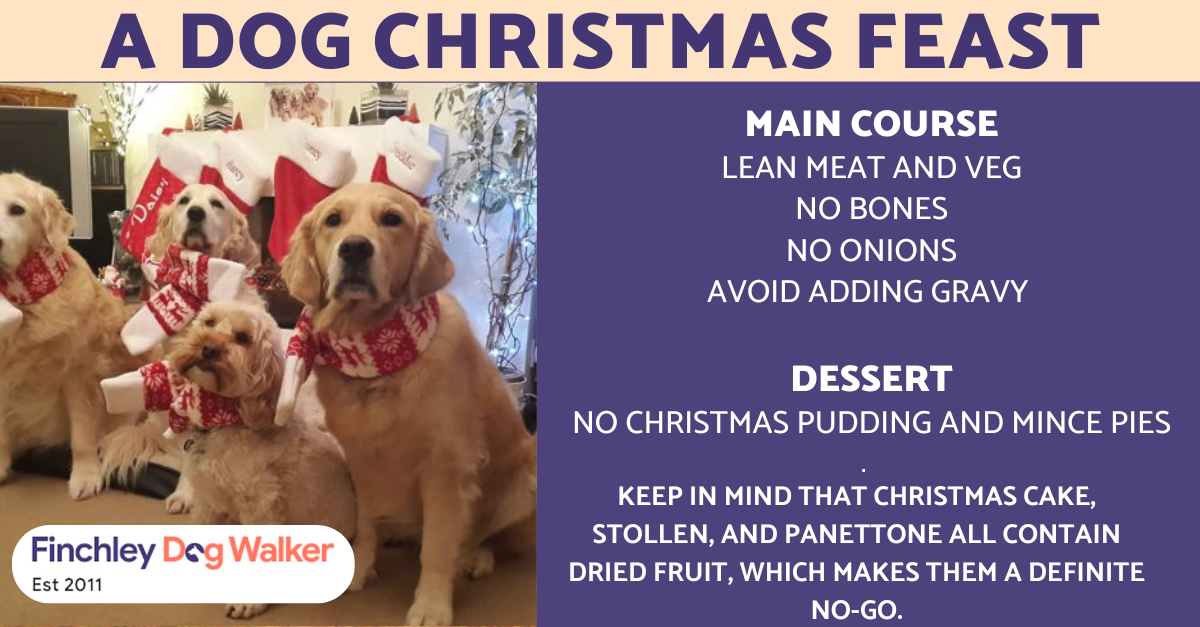
A small amount of plain, fully cooked, boneless and skinless turkey and suitable plain vegetables may be appropriate for many healthy dogs. Avoid gravy, stuffing, cooked bones, and rich or highly seasoned leftovers.
Mince pies deserve particular attention because traditional recipes contain raisins, sultanas or currants, which can cause serious kidney injury in dogs. If your dog eats one, contact your vet immediately. My guide to mince pies and dogs explains the risks and what to do.
My detailed guides cover this properly:
12 Christmas Hazards for Dogs and How to Avoid Them
Can Dogs Eat Christmas Dinner?
Safe Homemade Christmas Dog Treats [
Christmas is not a good time to introduce lots of rich new foods just because they look festive.
Your dog will not know that their turkey did not have gravy on it.
How do I make Christmas decorations safer for my dog?
Think about decorations from your dog’s height, not yours.
Low-hanging baubles, tinsel, ribbons, electrical cables, edible decorations and presents containing food can all become tempting when they suddenly appear in a familiar room.
Secure your Christmas tree properly and keep fragile or swallowable decorations out of reach. Tinsel and ribbon are particularly important because swallowing long pieces can cause serious intestinal problems.
I would also avoid hanging chocolates or other edible decorations from the tree in a home with a dog.
Festive plants need a little thought too. Different plants carry different levels of risk, so I wouldn’t describe every Christmas plant as equally poisonous. The safest approach is to keep decorative plants somewhere your dog cannot chew them and check the individual plant before bringing it into the house.
You can find the detailed information in 12 Christmas Hazards for Dogs and How to Avoid Them and Are Christmas Plants Dangerous for Our Pets?
What if my dog finds Christmas visitors difficult?
Your dog does not have to greet everybody who enters your home.
Visitors bring unfamiliar voices, smells, movement and attention. Children may also behave very differently from the adults your dog normally sees.
Some dogs enjoy this.
Others tolerate it.
Some would much rather be somewhere else.
Watch what your dog is actually doing rather than assuming that being quiet means they are comfortable. A dog may move away, become unusually still, pace, pant, repeatedly lick their lips, stop taking food or spend more time watching people.
Pay attention to those signals before things escalate.
My Dog Behaviour, Body Language and Emotional Wellbeing guide explains why looking at the whole dog and the situation around them is more useful than relying on a single signal.
Give your dog somewhere genuinely quiet where visitors will leave them alone. Their normal bed, water and familiar belongings can help.
If your dog walks away, let them.
They do not need to take part in every part of your Christmas to be part of the family.
Should I change my dog’s walks at Christmas?
I would keep walks familiar rather than trying to make Christmas Day into an endurance event.
A normal sniffy walk may be far more useful than trying to tire your dog out before visitors arrive.
The aim should be to give your dog an appropriate opportunity to move, sniff, toilet and decompress without creating more excitement or pressure.
Winter also brings practical considerations.
It gets dark earlier, paths may be icy or gritted, and parks can sometimes be unexpectedly busy with families and other dogs. Reflective equipment can improve visibility, and you may need to check or rinse paws after walking on heavily salted or gritted surfaces.
Fireworks can also continue around Christmas and New Year.
If your dog is worried by bangs, change your walking time or route rather than insisting on the normal walk.
My Dogs and Fireworks Guide explains how I approach walks and home routines during noisy periods. My wider Seasonal Pet Safety in Finchley guide covers winter and other seasonal changes.
How can I include my dog without overwhelming them?
Including your dog does not have to mean giving them everything humans are doing.
You could give them a favourite enrichment activity, hide part of their normal food for them to find, enjoy a familiar walk, give them a suitable toy or simply spend some quiet time together.
If you give a chew, choose something appropriate for your individual dog and supervise them rather than assuming a chew is safe simply because it is described as natural.
If your dog likes opening presents, you can make that into a supervised activity. Remove ribbon, tape, plastic and small packaging before they can swallow it.
But your dog also has permission to sleep through Christmas.
That may be their perfect celebration.
For more ideas that do not revolve around simply feeding extra treats, see my Dog Enrichment Guide.
What about puppies at Christmas?
A puppy may never have experienced a Christmas tree, flashing lights, wrapping paper, visitors or a house full of excited children.
That makes Christmas a learning experience as well as a celebration.
Introduce changes gradually where you can. Supervise access to decorations and presents and protect the puppy’s normal opportunities to sleep.
An overtired puppy doesn’t necessarily need another game or a longer walk. Sometimes they need a quieter environment and a chance to switch off.
My Bringing a Puppy Home hub is very worth reading
What about rescue or nervous dogs?
For a nervous or rescue dog, Christmas can create a lot of change in a very short time.
There is no prize for getting them through the busiest possible family gathering.
If your dog is more comfortable having their walk early, resting in another room and seeing only one or two familiar people, that can be a perfectly good Christmas.
In my work with rescue and nervous dogs, I would rather reduce pressure than keep exposing a dog to something because we think they ought to cope with it.
You can find more support through my Rescue Dog Help in Finchley hub and Dog Behaviour and Body Language guide
What about older dogs?
Senior dogs may find Christmas tiring even if they have coped well with it in previous years.
They may need more sleep, shorter walks, easier access to their bed and fewer interruptions.
If your dog has become noticeably less tolerant of visitors, handling or busy environments, do not automatically put it down to age. Behaviour changes can sometimes be linked to discomfort, pain, or changes in hearing or vision.
Discuss any significant or sudden change with your vet.
What should I do if my dog eats something dangerous?
Contact your veterinary practice promptly.
Do not wait for symptoms if you know your dog has eaten something potentially toxic such as chocolate, raisins, xylitol or human medication.
Keep the packaging where possible and be ready to tell the vet what your dog ate, approximately how much, when it happened and your dog’s weight.
Do not try to make your dog vomit and do not give salt water unless a veterinary professional specifically instructs you to do something. The RSPCA advises contacting a vet immediately following suspected poisoning because signs are not always immediate.
It is worth saving your veterinary practice’s Christmas and out-of-hours details before you need them.
You can also read my Health and Canine First Aid Hub
Going away over Christmas?
If you are travelling, think about your dog’s care well before the festive period.
Some dogs are perfectly comfortable in kennels or another care setting. Others, particularly rescue dogs, nervous dogs, older pets, and dogs who strongly depend on familiar routines, may find it easier to stay home.
My house-sitting service allows pets to remain in their own home while I follow their normal routine as closely as reasonably possible. I care for one house-sitting household at a time.
Availability over Christmas and New Year varies, so I do not suggest leaving arrangements until the last minute.
Find out about house sitting in Finchley and North London
A calmer Christmas is still Christmas
Your dog does not need to eat a full Christmas dinner, wear a jumper, greet twenty visitors and go on a two-hour walk to have a good day.
They need you to notice what they are comfortable with.
Keep dangerous food and tempting objects out of reach. Protect their normal routine where practical. Give them somewhere peaceful to rest. Let them move away from people when they want to.
Then enjoy Christmas together in whatever way suits the dog in front of you.
If you would prefer to have my Christmas advice together in a downloadable format, you can also see my paid Dogs and Christmas Digital Guide
Related Christmas Dog Guides
For more practical advice on keeping your dog safe, comfortable and happy throughout the festive season, explore these guides:
- 12 Christmas Hazards for Dogs and How to Avoid Them
- Maintaining Your Dog’s Routine at Christmas
- Getting Your Dog Ready for Christmas Visitors
- Can Dogs Eat Christmas Dinner?
- Can Dogs Eat Mince Pies? What to Do If Your Dog Eats One
- Dogs and Christmas Leftovers: What’s Safe?
- Homemade Christmas Dog Treats
- Safe Christmas Stockings for Dogs
- Are Christmas Plants Dangerous for Our Pets?
- Chocolate and Dogs: What to Do If Your Dog Eats Chocolate
- Dogs and Fireworks: Helping Your Dog Cope
Christmas Safety for Cat Owners
Sharing your home with cats too? Read my How to Keep Your Cats Safe at Christmas guide for advice on decorations, poisonous plants, festive food, visitors and keeping cats comfortable over Christmas.
Frequently Asked Questions
Should I keep my dog’s routine the same at Christmas?
As much as reasonably possible. Familiar meal times, walks, toilet opportunities, sleep and rest periods can give your dog some predictability while everything else changes around them. Both Blue Cross and Dogs Trust recommend maintaining normal routines where possible during Christmas.
Can my dog eat turkey at Christmas?
Many healthy dogs can have a small amount of plain, fully cooked, boneless and skinless turkey. Avoid gravy, stuffing, cooked bones, heavy seasoning and fatty skin.
Does my dog have to meet Christmas visitors?
No. If your dog would prefer to keep their distance or rest somewhere quiet, let them. UK animal welfare organisations recommend giving a dog somewhere undisturbed to retreat to. (
Should I give my dog an extra-long walk before Christmas visitors arrive?
Not necessarily. Keep exercise appropriate for your individual dog and use familiar walks, sniffing, enrichment and rest rather than trying to exhaust them.
What should I do if my dog eats chocolate or raisins?
Contact your vet promptly and tell them what was eaten, approximately how much, when it happened and your dog’s weight. Do not wait for symptoms and do not try to make your dog vomit unless specifically instructed by a veterinary professional.
Disclaimer
This guide provides general dog-care and Christmas safety information. It does not diagnose illness, poisoning or injury and does not replace advice from your veterinary practice. If your dog has eaten something potentially harmful, is injured or becomes unwell, contact your vet promptly.